Why you'll love this recipe
- Restaurant-quality at home
- Make-ahead convenience
- Crowd-pleaser crust
- Kid-approved snack
- Freezer-friendly leftovers
I still remember the first time I pulled a baguette from the oven on a rainy Thursday, the steam fogging the kitchen window and the crust crackling as I tapped it. My teenage son raced to the counter, his eyes wide, and shouted, “It’s like a fresh‑baked bakery!” That laugh‑filled moment turned this loaf into a family tradition. A few weeks later, after a long shift, I tossed the dough onto the counter, let it rest overnight, and woke to a golden loaf that smelled of toasted wheat and butter. The simple pleasure of slicing that crisp edge while the sun streamed through the kitchen made all the effort worth it.
The story
The oven roars, steam hisses, and the first whiff of caramelized dough hits your nose, promising a bite that crackles under your teeth. You watch the crust turn a deep golden, the sound of a perfect crust forming. In that moment, the kitchen feels like a Parisian boulangerie.
I first learned this baguette from my grandmother’s tiny kitchen in a cramped apartment, where the scent of fresh bread was the backdrop to Sunday stories. When I finally nailed the crust, she whispered, “Now you can bring the bakery home.” That simple nod turned this into my go‑to bake.
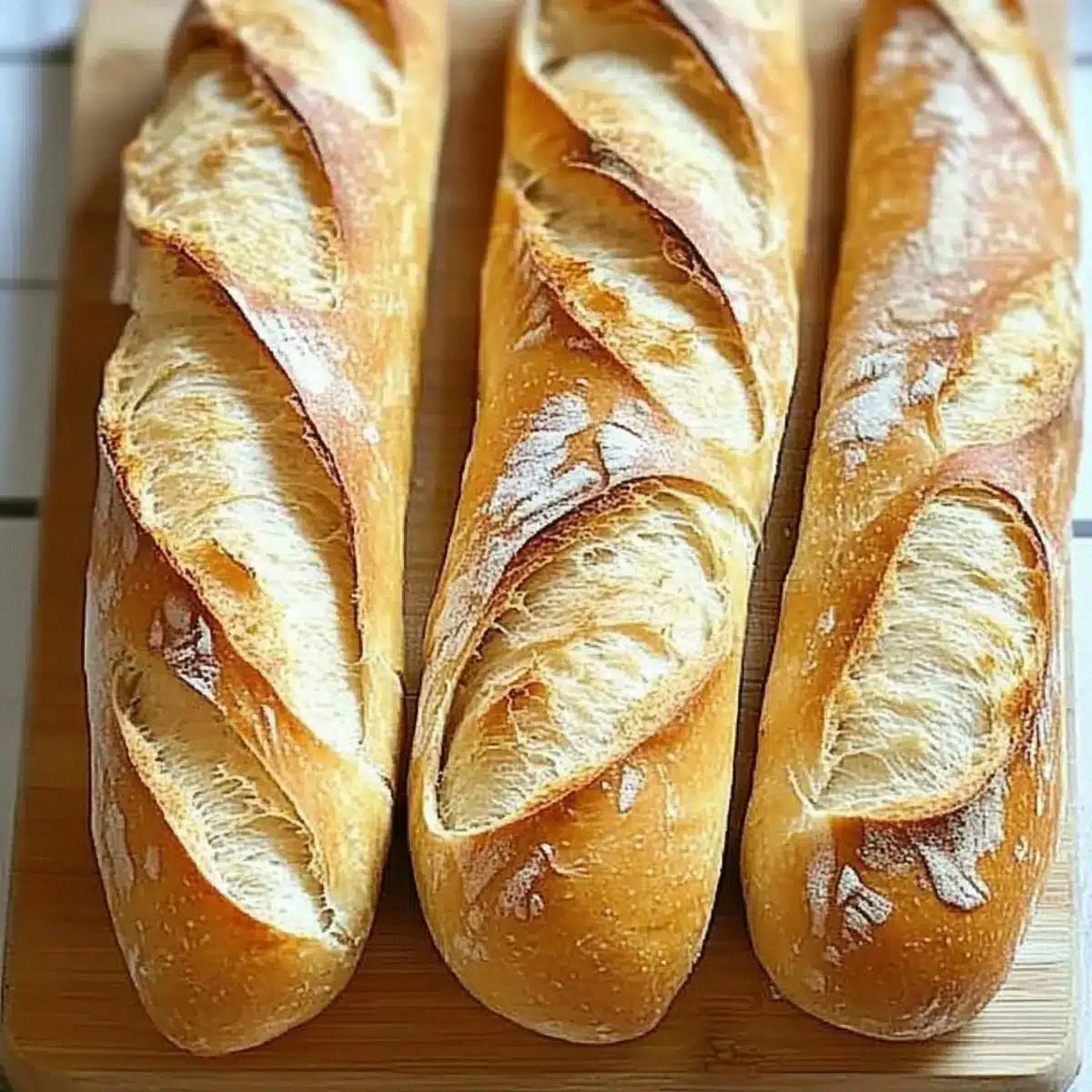
What sets this version apart is the overnight cold fermentation that builds flavor without over‑working the dough, plus the steam trick with a skillet that creates that coveted crackle. Most recipes skip the chill or the steam, leaving you with a soft loaf instead of a bakery‑level crust.
The flavor balance is a quiet duet: the salt lifts the wheat, a hint of sugar feeds the yeast for subtle sweetness, and the crust offers a smoky, nutty bite while the interior stays tender and airy. Every slice delivers that contrast of crisp edge and pillowy crumb.
Serve these baguettes alongside a bright arugula‑lemon salad, a hearty bowl of soup, or simply slathered with butter and jam for a quick brunch. They also shine as the base for open‑face sandwiches at a casual dinner party, and the dough can be baked ahead for busy mornings.
Don’t let the multiple steps intimidate you; the dough only needs a gentle hand and a night in the fridge, and the steam method is as simple as pouring water into a hot skillet. With a little patience, you’ll see that mastering a baguette is easier than you think.
I’ve baked this loaf four times, each time getting rave reviews from my teenage kids who devoured three pieces each. Their enthusiastic “more please!” is the green light to share the technique, so let’s roll up our sleeves and get that crust singing.
Why This Recipe Works
- Overnight cold fermentation develops flavor while strengthening gluten without over‑kneading.
- High‑heat bake with steam creates a crisp, blistered crust and airy crumb.
- Scoring the loaves allows controlled expansion for an open, irregular crumb.
Ingredient notes & substitutions
All-Purpose Flour
Provides the gluten network for rise and chew; using bread flour yields a denser, chewier crumb.
Active Dry Yeast
Creates lift and flavor; freshness is crucial for a good rise.
Sugar
Feeds the yeast and adds a subtle sweetness to the crust.
Cornmeal
Prevents sticking and adds a pleasant crunch to the base.
Equipment you'll need
Ingredients
- 4 cups All-Purpose Flour (Substitute with bread flour for a denser baguette.)
- 1.5 teaspoons Salt (Kosher or sea salt recommended.)
- 1 teaspoon Sugar (Can be omitted for a less sweet loaf.)
- 2 teaspoons Active Dry Yeast (Ensure freshness for optimal rise.)
- 1.5 cups Warm Water (Temperature around 110°F (43°C).)
- Cornmeal or Flour (Prevents sticking; alternately use parchment paper.)
Before You Start
- Measure flour by weight
- Warm water to 110°F
- Gather cornmeal for dusting
- Set a bowl of ice water for steam
Instructions
- 1Step 1
In a large mixing bowl, combine 4 cups of all-purpose flour, 1.5 teaspoons of salt, and 1 teaspoon of sugar. Stir until well blended.
- 2Step 2
In a separate bowl, dissolve 2 teaspoons of active dry yeast in 1.5 cups of warm water. Let sit for 5 to 10 minutes.
- 3Step 3
Pour the yeast mixture into the dry ingredients, mixing until a shaggy dough forms.
- 4Step 4
Turn the dough onto a floured surface and knead for 8 to 10 minutes until smooth and elastic.
- 5Step 5
Shape the kneaded dough into a ball, place in a greased bowl, and let it rise until doubled, about 1 to 1.5 hours.
- 6Step 6
Punch down the dough, cover, and refrigerate for overnight cold fermentation (8 to 12 hours).
- 7Step 7
Remove from the fridge, allow to warm for 30 minutes, then divide into two portions and shape into elongated loaves.
- 8Step 8
Transfer to a dusted baking sheet, cover, and let rise for another 45 to 60 minutes.
- 9Step 9
Preheat oven to 475°F (245°C) and place a skillet on the bottom rack.
- 10Step 10
Slash the tops of the loaves, pour water into the skillet, and bake for 20 to 25 minutes until golden brown.
- 11Step 11
Cool on a wire rack for at least 20 minutes before slicing.
Pro tips
Preheat oven early
Give the oven at least 30 minutes to reach 475°F for maximum oven spring.
Use hot skillet for steam
Place a metal skillet on the bottom rack and pour boiling water just before loading the loaves.
Score dough just before bake
A quick diagonal slash lets the loaf expand without tearing the crust.
Let dough rest after fridge
Allow the chilled dough to come to room temperature for 30 minutes so it rises evenly.
Avoid over‑kneading
Stop kneading when the dough feels smooth and elastic to keep the crumb light.
Dust baking sheet with cornmeal
A thin layer of cornmeal stops the loaves from sticking and adds texture.
Cover loaves while proofing
A damp towel prevents the surface from drying out during the second rise.
Check crust color, not time
When the loaves are deep golden‑brown, they’re done; oven temps can vary.
Variations to try
Cheesy Garlic Baguette
Fold shredded mozzarella and minced garlic into the dough before the first rise for a melty, aromatic twist.
Whole Wheat Version
Replace half of the all‑purpose flour with whole‑wheat flour for a nuttier flavor and extra fiber.
Mini Baguette Sliders
Shape the dough into 6‑inch rolls; perfect for bite‑size sandwiches or snack plates.
Herb‑Infused Baguette
Add chopped rosemary and thyme to the dough for a fragrant, Mediterranean flair.
Serving Suggestions
Troubleshooting
Crust is soft
Add steam in the first 10 minutes and increase oven temperature by 25°F.
Loaf didn’t rise
Check yeast freshness; ensure water isn’t too hot and give the dough a warm, draft‑free spot.
Crumb is dense
Knead longer to develop gluten and allow a full overnight fermentation for better gas retention.
Storage & make-ahead
Refrigerator
Wrap tightly in a paper bag inside a plastic container; keep up to 3 days.
Freezer
Freeze cooled loaves wrapped in foil and a freezer bag for up to 2 months; thaw at room temp before reheating.
Best way to reheat
Spritz with water, then bake at 350°F for 10‑12 minutes until the crust crisps again.
Make-ahead
Prepare the dough and refrigerate overnight; shape and bake the next day for freshest crust.
Ingredients
- 4 cups All-Purpose Flour (Substitute with bread flour for a denser baguette.)
- 1.5 teaspoons Salt (Kosher or sea salt recommended.)
- 1 teaspoon Sugar (Can be omitted for a less sweet loaf.)
- 2 teaspoons Active Dry Yeast (Ensure freshness for optimal rise.)
- 1.5 cups Warm Water (Temperature around 110°F (43°C).)
- Cornmeal or Flour (Prevents sticking; alternately use parchment paper.)
Instructions
- 1In a large mixing bowl, combine 4 cups of all-purpose flour, 1.5 teaspoons of salt, and 1 teaspoon of sugar. Stir until well blended.
- 2In a separate bowl, dissolve 2 teaspoons of active dry yeast in 1.5 cups of warm water. Let sit for 5 to 10 minutes.
- 3Pour the yeast mixture into the dry ingredients, mixing until a shaggy dough forms.
- 4Turn the dough onto a floured surface and knead for 8 to 10 minutes until smooth and elastic.
- 5Shape the kneaded dough into a ball, place in a greased bowl, and let it rise until doubled, about 1 to 1.5 hours.
- 6Punch down the dough, cover, and refrigerate for overnight cold fermentation (8 to 12 hours).
- 7Remove from the fridge, allow to warm for 30 minutes, then divide into two portions and shape into elongated loaves.
- 8Transfer to a dusted baking sheet, cover, and let rise for another 45 to 60 minutes.
- 9Preheat oven to 475°F (245°C) and place a skillet on the bottom rack.
- 10Slash the tops of the loaves, pour water into the skillet, and bake for 20 to 25 minutes until golden brown.
- 11Cool on a wire rack for at least 20 minutes before slicing.