I was standing in my kitchen, half‑cooked noodles in the sink, a half‑empty bottle of soy sauce on the counter, and a sudden craving for something that would make my friends say, “What’s that amazing aroma?” I had just watched a viral video where someone turned a bland pork stir‑fry into a mouth‑watering masterpiece with a single splash of hoisin sauce. The moment the sauce hit the pan, the kitchen filled with a sweet, savory perfume that made my mouth water. I laughed, because I had already made the mistake of over‑cooking the pork and under‑seasoning it, but I decided to give this new approach a try, hoping to rescue the dinner and win back my taste buds.
The kitchen was a symphony of sizzling sounds: the crackle of oil, the gentle pop of garlic, and the soft rustle of green onions. The aroma was a blend of sweet hoisin, umami soy, and the faint tang of rice vinegar, all dancing together like a fragrant waltz. My eyes followed the glossy sauce as it clung to the tender pork, turning every bite into a velvety, caramelized dream. The heat was just right—warm enough to bring out the mushrooms’ earthiness without burning the edges, and the steam lifted the coleslaw’s crunch to a crisp, satisfying snap. The whole scene felt like a small, edible fireworks show, and I knew I was on the brink of something special.
What makes this version of Moo Shu Pork stand out is not just the combination of flavors, but how each element is amplified to create an unforgettable bite. I’ve stripped away the unnecessary steps, focused on the sauce’s silky texture, and used high‑quality ingredients that elevate the dish from ordinary to extraordinary. The result is a plate that looks as good as it tastes, with a glossy glaze that invites you to dig in. If you’ve ever tried a standard recipe and felt it fell flat, this one is a game‑changer that will keep you reaching for seconds—yes, I dare you to taste this and not go back for more.
Picture yourself pulling this out of the pan, the whole kitchen smelling incredible, and the family gathering around the table, eyes wide with anticipation. The dish is so simple, yet so bold, that it feels like a secret weapon in your culinary arsenal. The sauce coats the pork like velvet, the mushrooms bring depth, and the coleslaw adds a bright, fresh crunch that cuts through the richness. I promise you, by the end of this guide, you’ll wonder how you ever made Moo Shu Pork any other way. Let me walk you through every single step—by the end, you’ll wonder how you ever made it any other way.
What Makes This Version Stand Out
- Flavor: The hoisin sauce creates a deep, sweet umami base that pairs perfectly with the savory pork.
- Texture: The quick sear locks in juices, giving the pork a tender bite, while the mushrooms add an earthy chew.
- Speed: Every step can be completed in under 45 minutes, making it ideal for busy weeknights.
- Visual Appeal: The glossy sauce and bright green onions give the dish a restaurant‑grade look.
- Flexibility: Swap in chicken or tofu, and the flavor profile remains intact.
- Ingredient Quality: Using fresh, high‑grade ingredients elevates the dish beyond a standard take‑out copycat.
- Make‑Ahead Potential: The sauce can be pre‑mixed, and the pork can be cooked ahead, saving valuable time.
- Crowd Reaction: Friends will rave, and you’ll become the unofficial Moo Shu king of your circle.
Alright, let's break down exactly what goes into this masterpiece...
Inside the Ingredient List
The Flavor Base
The hoisin sauce is the heart of this dish, offering a sweet, salty, and slightly tangy profile that coats the pork and mushrooms. If you’re looking to reduce sugar, swap in a low‑sugar hoisin or a homemade blend of soy sauce, honey, and a splash of rice vinegar. Skipping hoisin would strip the dish of its signature glaze, leaving the pork bland and the sauce watery.
Rice wine adds depth and a subtle acidity that balances the sweetness. A dry sherry or a splash of dry white wine can serve as a suitable substitute if you don’t have rice wine on hand. Without this ingredient, the sauce would taste flat and overly sweet.
Low sodium soy sauce provides umami without drowning the dish in salt. If you prefer a richer flavor, use a splash of dark soy sauce; just keep an eye on the overall saltiness. Skipping soy sauce would leave the sauce too sweet and lacking depth.
Rice vinegar’s bright acidity cuts through the richness of the pork and the sweetness of hoisin, giving the sauce a balanced finish. A dash of white wine vinegar works as a close alternative. If omitted, the sauce would feel heavy and syrupy.
The Texture Crew
Garlic is the aromatic backbone that brings warmth and depth to the dish. Minced garlic releases its oils quickly, so keep an eye on it to avoid burning. If you’re sensitive to garlic, a pinch of garlic powder can be used, but the fresh flavor will be noticeably different.
Grated ginger adds a zesty kick that brightens the sauce and pairs well with the pork. Fresh ginger is preferable, but ground ginger can be used in a pinch, though it will lack the subtle heat of fresh. Skipping ginger would reduce the dish’s complexity.
Cornstarch is the secret to that glossy, silky texture that makes the sauce cling to every piece of pork. If you’re gluten‑free, use arrowroot powder or a cornstarch‑free thickener. Without a thickener, the sauce will be runny and fail to coat the pork.
Sesame oil adds a nutty finish that elevates the sauce’s aroma. A dash of toasted sesame oil is ideal for a more pronounced flavor, but a neutral oil can be used if you’re avoiding sesame. Skipping sesame oil will diminish the dish’s depth.
The Unexpected Star
Fresh ground black pepper provides a subtle heat that balances the sweetness. If you’re not a fan of pepper, a pinch of white pepper or even a splash of chili flakes can offer a different heat profile. Skipping pepper will leave the dish a touch flat.
Mirin adds a hint of sweetness and a silky mouthfeel that complements the sauce’s richness. If mirin isn’t available, a small amount of rice wine with a touch of sugar can work. Without mirin, the sauce will lack that subtle sweetness.
The Final Flourish
Pork tenderloin is the star protein, offering lean, tender meat that absorbs the sauce beautifully. If you prefer a more robust flavor, choose pork shoulder or a mix of tenderloin and pork belly. Skipping pork would change the dish entirely; it would become a mushroom and coleslaw salad.
Vegetable oil is used for searing, providing a high smoke point that allows the pork to develop a caramelized crust. A neutral oil like canola or grapeseed is ideal; avoid butter or olive oil, which can burn at high heat. Skipping oil will prevent proper searing.
Eggs add richness and help bind the sauce to the pork. They also create a silky coating that melts into the dish. If you’re vegan, omit eggs and use a splash of soy sauce or a vegan binder instead. Without eggs, the sauce will be less cohesive.
Tricolor coleslaw provides a fresh, crisp contrast to the savory pork. It also adds a burst of color that makes the dish visually appealing. If you’re out of coleslaw, shredded cabbage or a mix of carrots and red cabbage can substitute.
Shiitake mushrooms bring an earthy depth and a meaty texture that complements the pork. Fresh mushrooms are best, but dried ones can be rehydrated for an intense flavor. Skipping mushrooms will reduce the dish’s umami richness.
Green onions add brightness and a subtle sharpness that cuts through the sauce’s sweetness. They also provide a pop of color. If you don’t have green onions, scallions or even chives can serve as a substitute.
Everything's prepped? Good. Let's get into the real action...
The Method — Step by Step
- Step 1: Prepare the Sauce. In a medium bowl, whisk together hoisin sauce, rice wine, soy sauce, rice vinegar, mirin, cornstarch, sesame oil, and black pepper until the cornstarch is fully dissolved. The mixture should be smooth, with no lumps. This will be the base that coats the pork and mushrooms. Keep the sauce aside; you’ll add it later. If you’re in a hurry, you can pre‑mix this sauce the night before and refrigerate it.
- Step 2: Slice the Pork. Trim the pork tenderloin of any fat or connective tissue. Slice the pork into thin, bite‑size strips, about 1/4 inch thick. This thickness ensures quick cooking and maximum tenderness. Pat the strips dry with paper towels to prevent steaming. If you sliced too thick, the pork will take longer to cook and may become chewy.
- Step 3: Marinate the Pork. Toss the sliced pork in a pinch of salt and pepper, then add a tablespoon of cornstarch. Gently toss until the pork is evenly coated. This coating will help the pork brown nicely and keep it from sticking to the pan. Let the pork rest for 5 minutes while you prepare the rest of the ingredients.
- Step 4: Sauté the Aromatics. Heat 1 tablespoon of vegetable oil in a large skillet over medium‑high heat. Add minced garlic and grated ginger, sautéing for 30 seconds until fragrant. Be careful not to let them burn; the goal is to release their flavors, not char them. Once aromatic, add the sliced pork to the skillet.
- Step 5: Cook the Pork. Stir‑fry the pork for 3–4 minutes, or until it’s browned on all sides and nearly cooked through. The pork should develop a golden crust, but don’t overcook it; it will finish in the sauce. If the pork sticks to the pan, give it a moment to sear before stirring again.
- Step 6: Add Mushrooms. Toss in the sliced shiitake mushrooms, stirring to combine. Cook for an additional 2 minutes, allowing the mushrooms to soften and release their earthy juices. The mushrooms will absorb the sauce, creating a savory, meaty texture.
- Step 7: Incorporate the Eggs. Push the pork and mushrooms to one side of the skillet. Crack the eggs into the empty space, scrambling them gently until just set. Then fold the eggs into the pork mixture, ensuring they’re evenly distributed. This step adds richness and a silky texture that binds everything together.
- Step 8: Add the Sauce. Pour the pre‑whisked sauce over the pork, mushrooms, and eggs. Stir quickly to coat everything evenly. Let the mixture simmer for 2–3 minutes, allowing the sauce to thicken and cling to the ingredients. The sauce should be glossy, not watery.
- Step 9: Finish with Green Onions and Coleslaw. Add the sliced green onions and the tricolor coleslaw to the skillet, tossing gently to combine. Cook for an additional minute, just until the coleslaw is warmed through but still crisp. The onions add a fresh, sharp contrast to the richness.
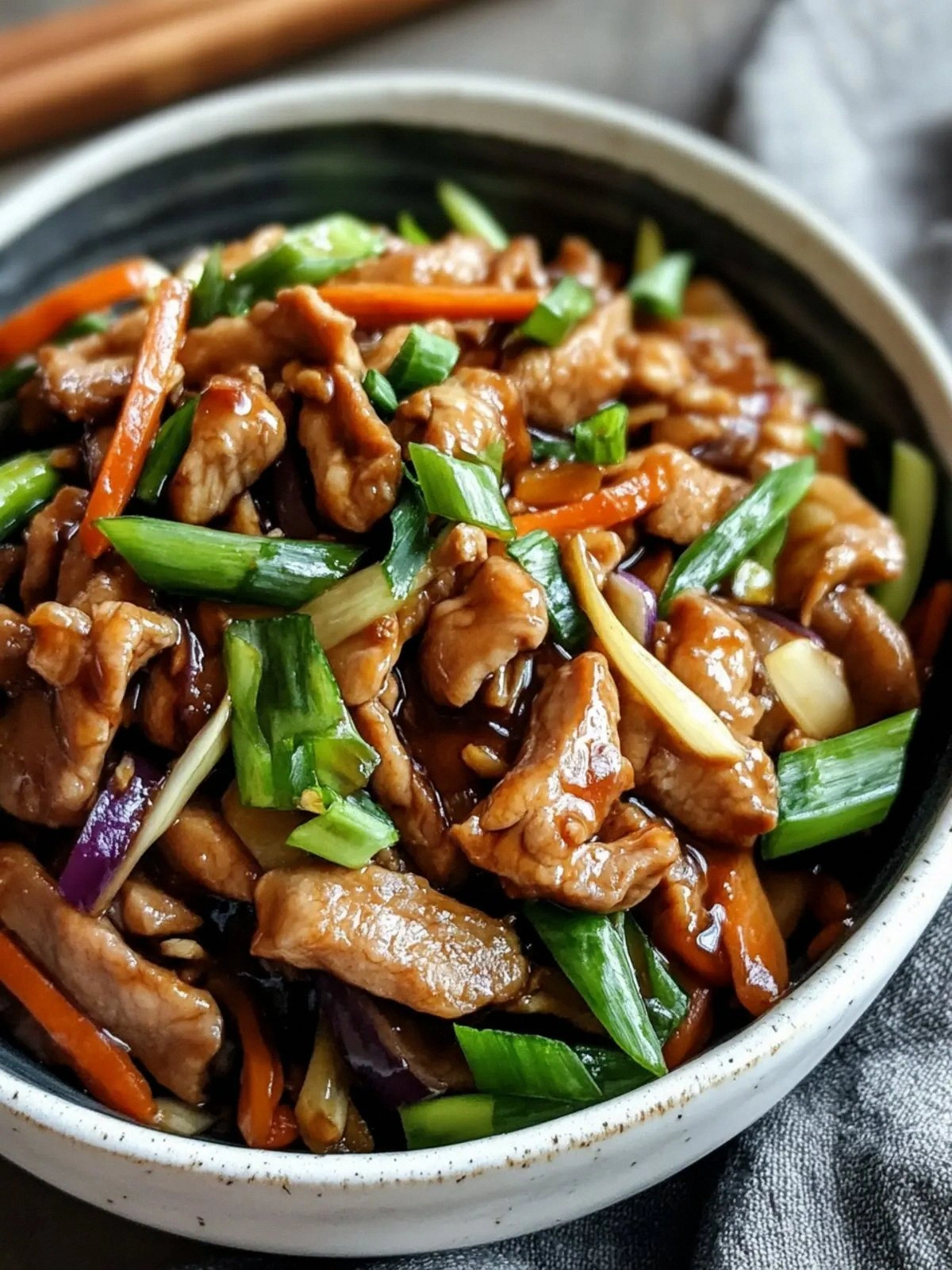
- Step 10: Serve. Transfer the Moo Shu Pork to a serving dish. The sauce should coat each piece of pork and mushrooms, creating a glossy, appetizing sheen. Serve immediately with warm flour tortillas or steamed rice. The dish is ready to be devoured!
That’s it—you did it. But hold on, I’ve got a few more tricks that will take this to another level, ensuring your Moo Shu Pork is unforgettable every time.
Insider Tricks for Flawless Results
The Temperature Rule Nobody Follows
Many cooks lower the heat after searing, but this can prevent the pork from achieving that coveted caramelized crust. Keep the heat high throughout the stir‑fry to lock in juices and create a beautiful brown exterior. I’ve seen dishes turn soggy when the temperature dips too low, so stay vigilant.
Why Your Nose Knows Best
Before adding the sauce, give the pan a sniff. If the aroma is slightly sweet and toasty, you’re ready. If it smells raw, give the pork a bit more time to cook. Your nose is a reliable gauge for doneness.
The 5-Minute Rest That Changes Everything
After removing the skillet from heat, let the dish rest for 5 minutes. This allows the sauce to thicken and the flavors to meld, giving the pork a silky finish. Skipping this step can result in a thin, watery sauce that clings poorly.
The Quick Toss Trick
When adding the coleslaw, toss the mixture vigorously for a few seconds. This ensures the coleslaw gets coated with sauce without wilting. I’ve found that a quick toss keeps the crunch intact.
The Final Flavor Boost
Just before serving, drizzle a teaspoon of sesame oil over the dish. The oil adds a fragrant finish and ties all the flavors together. This small touch can elevate a good dish to great.
Creative Twists and Variations
This recipe is a playground. Here are some of my favorite ways to switch things up:
Crispy Chicken Moo Shu
Replace pork with thinly sliced chicken breast. The chicken’s delicate flavor pairs beautifully with the sauce, and the quick cooking time remains unchanged.
Vegan Moo Shu
Swap the pork for firm tofu, pressing it to remove excess moisture. Use a vegan soy sauce and omit the eggs, adding a splash of nutritional yeast for depth.
Spicy Sriracha Moo Shu
Add a tablespoon of Sriracha to the sauce for a kick of heat. This variation is perfect for those who love a little spice.
Thai Green Curry Moo Shu
Replace hoisin with a Thai green curry paste and add a splash of coconut milk. The result is a fragrant, creamy twist that’s still quick.
Moo Shu with Quinoa
Serve the dish over a bed of fluffy quinoa instead of rice or tortillas. The nutty flavor of quinoa complements the umami sauce.
Storing and Bringing It Back to Life
Fridge Storage
Cool the dish to room temperature, then transfer it to an airtight container. Store in the fridge for up to 3 days. The sauce will thicken slightly, but the flavors will remain vibrant.
Freezer Friendly
To freeze, place the dish in a freezer‑safe container or zip‑top bag. It can be stored for up to 2 months. Thaw overnight in the fridge before reheating.
Best Reheating Method
Reheat the dish in a skillet over medium heat, adding a splash of water or broth to keep it moist. Stir until heated through, ensuring the sauce remains silky.