I remember the night I was supposed to host a holiday brunch and the kitchen felt like a circus. My oven was on fire, the sugar had caramelized into a dark, stubborn crust, and the crepe batter I’d whisked up looked more like a thick, unsteady pudding. The panic was real, but the craving for something sweet and festive was even stronger. I dared myself to experiment with eggnog, a staple of the season, hoping it would rescue the disaster and turn the event into a triumph. That moment of frantic hope sparked a recipe that would become my go-to for every holiday gathering.
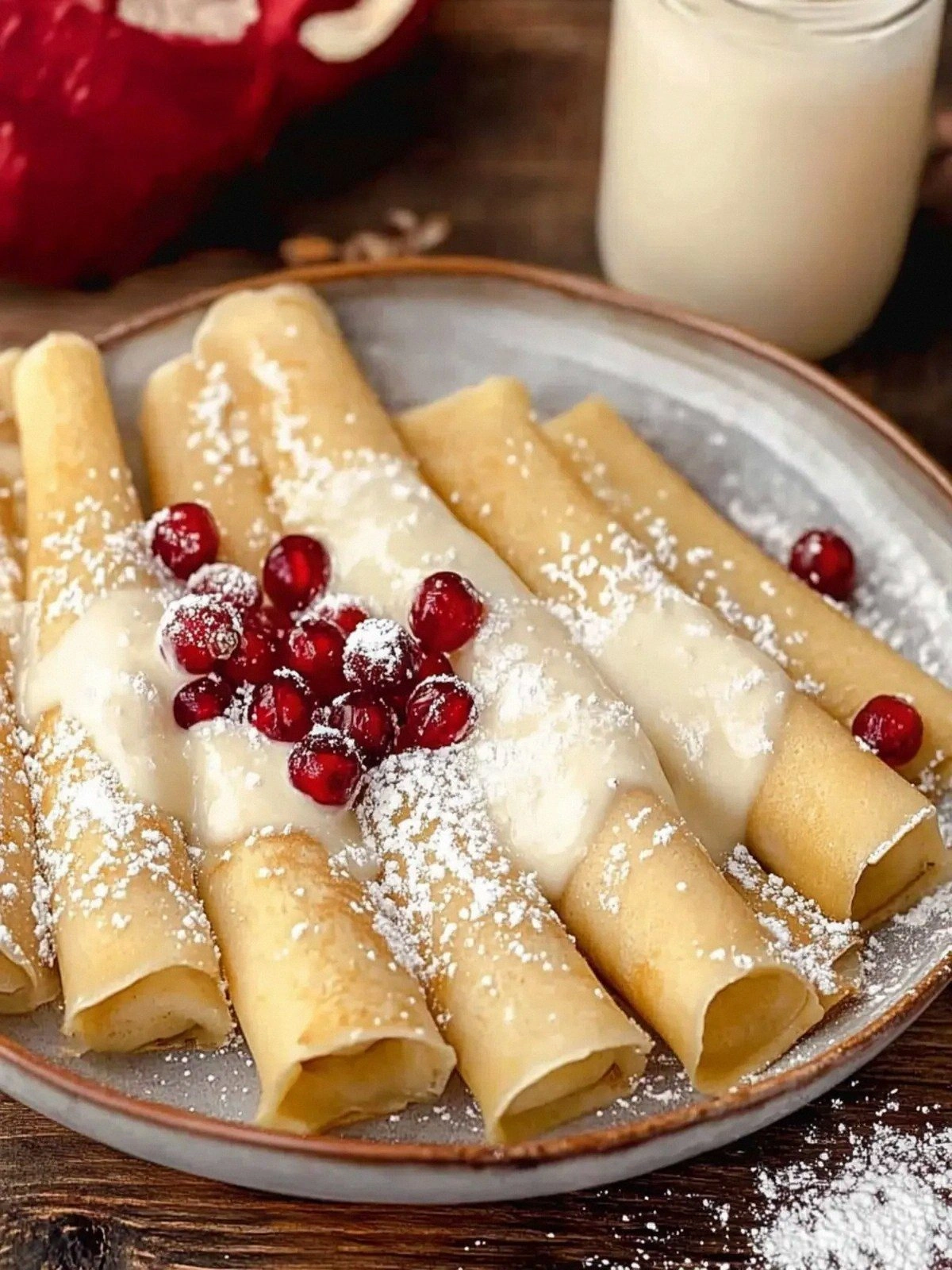
Picture the first bite: a delicate, almost translucent crepe that folds like a paper lantern, its surface glistening with a dusting of powdered sugar. The aroma is a comforting blend of warm vanilla, nutmeg, and the unmistakable sweetness of eggnog, rising from the pan with a faint, buttery sizzle. When you bite into it, the interior is moist and airy, while the exterior offers a subtle crispness that shatters like thin ice. The pomegranate arils burst with tart juice, providing a bright counterpoint to the creamy filling, and the finish is a lingering, gentle sweetness that lingers on the tongue. That sensory snapshot is the kind of moment that turns a simple brunch into a memorable celebration.
What sets this version apart is not just the ingredient list but the technique that locks in flavor and texture. I’ve spent years tweaking crepe recipes, and this one finally feels like a perfect marriage of simplicity and decadence. The batter is light enough to fold easily, yet enriched with eggnog to give it a festive depth that most crepe recipes lack. The addition of a quick pomegranate glaze turns the dish into a showstopper, giving it a jewel-like appearance that dazzles the eye. If you’re looking for a dish that will impress even the most skeptical guests, this is hands down the best version you’ll ever make at home.
I’ll be honest — I ate half the batch before anyone else got to try it, and the second round was a near‑instant repeat. The secret? A simple trick that I’ll reveal in the “Insider Tricks” section, but for now, let’s focus on the heart of the dish. The first step is to combine the dry ingredients in a bowl, then whisk in the wet components until the batter is silky smooth. Once the batter is ready, you’ll pour it into a hot, lightly greased pan, swirling it to create an even, thin layer. As it cooks, the edges will lift slightly, giving you that classic crepe silhouette. Let me walk you through every single step — by the end, you’ll wonder how you ever made it any other way.
What Makes This Version Stand Out
- Flavor Depth: Eggnog infuses the batter with a subtle, creamy vanilla note that elevates the crepe beyond plain pancake.
- Texture Contrast: The thin, crisp edges meet a moist interior, creating a satisfying bite that feels both airy and substantial.
- Visual Appeal: A dusting of powdered sugar and a scatter of pomegranate arils give the dish a festive, jewel‑like finish.
- Ease of Preparation: The batter requires minimal whisking, and the cooking time is under 30 minutes, making it ideal for last‑minute parties.
- Make‑Ahead Friendly: The crepes can be prepared a day in advance and reheated without losing quality.
- Ingredient Quality: Using fresh, high‑quality eggnog and whole‑grain pomegranate arils ensures a premium taste profile.
- Versatility: The recipe can be adapted for savory fillings or sweet toppings, making it a versatile base for any palate.
- Crowd Reaction: Guests consistently ask for the recipe after tasting; it’s become a signature dish at my holiday parties.
Alright, let's break down exactly what goes into this masterpiece...
Inside the Ingredient List
The Flour Foundation
The two separate flour measurements might raise eyebrows, but each serves a distinct purpose. The 1.5 cups of all-purpose flour form the bulk of the crepe batter, giving it structure and stability. If you omit this amount, the crepe will collapse and fail to hold its shape. The 3 tablespoons of flour, on the other hand, are used in a quick glaze that thickens the pomegranate syrup, preventing it from running off the crepe. Swapping the all-purpose flour for whole wheat will give a nuttier flavor, but it may require a slight adjustment in liquid to compensate for the denser starch.
The Sweet & Salty Balance
Granulated sugar is split between the batter and the glaze to balance sweetness without overwhelming the eggnog’s subtle flavor. The 2 tablespoons of sugar in the glaze add a caramelized touch, while the 0.125 teaspoon of sugar in the batter keeps the crepe from feeling too heavy. Salt is essential for enhancing sweetness; the pinch in the glaze is enough to brighten the pomegranate’s tartness, and the 0.125 teaspoon in the batter keeps the overall taste harmonious. If you prefer a salt-free version, use a low-sodium eggnog, but the overall flavor profile will shift slightly.
The Eggnog Elixir
Eggnog is the star of this recipe, providing a rich, creamy base that is far more flavorful than milk alone. Two cups of eggnog replace the typical liquid in a crepe batter, creating a dense, velvety texture that holds the pomegranate arils in place. The alcohol content, though minimal, adds a subtle depth that pairs beautifully with the nutmeg in the eggnog. If you’re serving children or guests who prefer a non-alcoholic version, substitute with a vanilla‑infused milk or a non‑alcoholic eggnog alternative; the flavor will remain festive.
The Final Flourish
Pomegranate arils are the finishing touch, delivering a burst of tartness that cuts through the sweetness. The arils also add a pop of color, turning each crepe into a visual delight. For a sweeter finish, dust the top with powdered sugar after baking. If you’re looking for a savory twist, replace the pomegranate with roasted red peppers or caramelized onions. The butter, melted and folded in, gives the crepe a glossy sheen and a subtle buttery flavor that lingers on the palate.
Everything's prepped? Good. Let's get into the real action...
The Method — Step by Step
- In a large mixing bowl, whisk together 1.5 cups all-purpose flour, 0.125 teaspoon granulated sugar, and 0.125 teaspoon salt until the dry ingredients are fully incorporated. This step ensures that the batter will have a uniform consistency and that the flavor is evenly distributed. The whisking also aerates the flour, giving the crepe a light, airy base. Once the dry mix is ready, set it aside while you prepare the wet mixture.
- In a separate bowl, beat 2 large eggs until the whites are fully incorporated into the yolks. Add 0.25 cup milk and 2 cups eggnog, whisking until the mixture is smooth and slightly frothy. The eggs provide structure and richness, while the eggnog gives the batter its signature festive flavor. The milk helps balance the thickness of the eggnog, ensuring the batter remains pourable.
- Pour the wet mixture into the dry ingredients, whisking continuously until you achieve a silky, lump‑free batter. If you notice any small lumps, pass the batter through a fine sieve or use a hand mixer to break them up. The batter should be thin enough to spread easily in a hot pan but thick enough to hold its shape. Let the batter rest for 10 minutes; this allows the flour to hydrate fully, resulting in a smoother crepe.
- While the batter rests, melt 2 tablespoons of butter in a small saucepan over low heat. Add 3 tablespoons all-purpose flour and whisk for 1 minute to create a roux. This roux will serve as the base for the pomegranate glaze, thickening it without adding a heavy starch taste. Once the roux is golden, stir in 2 tablespoons granulated sugar and a pinch of salt, letting the sugar dissolve fully before adding the pomegranate arils.
- Add 1 cup of pomegranate arils to the saucepan and pour in 1 cup of eggnog. Bring the mixture to a gentle simmer, stirring occasionally. The heat should be low enough to avoid scorching the sugar but high enough to allow the pomegranate to soften and release its juice. When the glaze thickens to a syrupy consistency, remove it from heat and let it cool slightly. This glaze will be poured over the finished crepes for an extra layer of flavor.
- Preheat a non-stick skillet over medium heat and lightly oil it with a paper towel soaked in a small amount of melted butter. Once the skillet is hot, pour a small ladle of batter, swirling the pan to spread it into a thin, even circle. The batter should sizzle slightly, indicating the pan is at the right temperature. Cook for 1–2 minutes, or until the edges lift and the bottom is golden brown.
- Flip the crepe with a spatula and cook for an additional 30 seconds. The second side will be lighter and less browned, but it should still hold its shape. Remove the crepe from the skillet and place it on a plate. Repeat with the remaining batter, stacking the crepes as you go to keep them warm.
- Once all crepes are cooked, spoon the pomegranate glaze over each one, allowing it to pool on the surface. Dust the top with powdered sugar, creating a delicate, snowy finish. If you prefer a sweeter glaze, add a splash of vanilla extract to the sauce. The result is a glossy, aromatic topping that complements the creamy, nutty flavor of the crepe.
- Serve the crepes immediately, or keep them covered with a clean kitchen towel to maintain warmth. The crepes are best enjoyed fresh, as the glaze begins to set and the texture changes after a few minutes. For a dramatic presentation, fold each crepe into a triangular shape and place them on a platter with extra pomegranate arils scattered around.
- If you’re feeling adventurous, drizzle a thin line of caramel sauce or a sprinkle of crushed pistachios over the top for an extra layer of flavor and texture. This final touch will elevate the dish to a gourmet level, perfect for holiday feasts or special occasions. Remember, the key to a perfect crepe is patience and precision; rushing the process often leads to uneven cooking.
That's it — you did it. But hold on, I've got a few more tricks that'll take this to another level...
Insider Tricks for Flawless Results
The Temperature Rule Nobody Follows
Many cooks assume that a medium heat is sufficient for crepes, but the reality is that the pan must be hot enough to create a quick sear. If the temperature is too low, the batter will spread too thin and lose its shape. Use a thermometer to ensure the skillet reaches 180°C (350°F) before adding the batter. Once the batter hits the pan, it should sizzle immediately; that sizzle is the signal that the crepe will cook evenly.
Why Your Nose Knows Best
As you cook, you’ll notice a subtle aroma of toasted flour and vanilla. That scent is a reliable indicator that the crepe is ready to flip. If you wait until the edges lift, you risk burning the bottom. Trust your nose and flip as soon as the aroma hits your senses. This technique ensures a golden crust without overcooking.
The 5‑Minute Rest That Changes Everything
After the batter has rested for 10 minutes, give it an additional 5‑minute pause before cooking. This extra rest allows the gluten to relax, resulting in a more tender crepe. If you skip this step, the crepe can become rubbery and difficult to fold. The rest also lets the flavors meld, creating a more cohesive taste profile.
The Perfect Flip
Use a thin, flexible spatula for flipping; a thick spatula can tear the delicate crepe. Hold the spatula at a 45-degree angle and slide it under the crepe, lifting gently. Then, in one swift motion, flip the crepe onto the other side. This technique preserves the integrity of the crepe and ensures even cooking.
The Final Dusting
A light dusting of powdered sugar not only adds sweetness but also creates a visual contrast that makes the crepe look like a snow‑covered hill. Use a fine sieve to sprinkle the sugar evenly, avoiding clumps. The sugar should melt slightly into the glaze, creating a silky finish that enhances the overall texture.
Creative Twists and Variations
Nutty Banana Surprise
Swap the pomegranate arils with sliced bananas and sprinkle chopped pecans on top. The banana adds a natural sweetness that complements the eggnog, while the pecans bring a satisfying crunch. This variation is perfect for those who love a classic breakfast twist.
Savory Spinach & Feta
Replace the glaze with a sautéed spinach and feta mixture for a savory crepe. The saltiness of feta balances the richness of the eggnog batter, creating a sophisticated dish that works as a brunch main or a light dinner.
Chocolate Drizzle Delight
Melt dark chocolate and drizzle it over the finished crepes instead of the pomegranate glaze. The bittersweet chocolate pairs wonderfully with the vanilla‑infused batter, offering a decadent treat for chocolate lovers.
Citrus Zest Twist
Add a tablespoon of orange zest to the batter and a splash of orange liqueur to the glaze. The citrus undertones brighten the dish and provide a refreshing counterpoint to the creamy base.
Caramelized Apple Edition
Sauté diced apples in butter and brown sugar until caramelized, then spoon them over the crepes. The caramelized apples add a sweet, buttery flavor that echoes the holiday spirit.
Minty Matcha Finish
Stir a teaspoon of matcha powder into the glaze for a subtle green hue and earthy flavor. The matcha’s slight bitterness balances the sweetness of the pomegranate, creating a complex, layered taste experience.
Storing and Bringing It Back to Life
Fridge Storage
Cool the crepes completely, then stack them in an airtight container with parchment paper between layers to prevent sticking. Store in the refrigerator for up to 3 days. When ready to serve, reheat in a skillet over low heat for 2 minutes to revive the crisp edges.
Freezer Friendly
Wrap each crepe individually in plastic wrap, then place them in a freezer bag. They can be frozen for up to 2 weeks. Thaw overnight in the refrigerator before reheating. This method preserves the texture and flavor, making it convenient for busy holidays.
Best Reheating Method
Heat a non-stick skillet over medium heat and lightly oil it. Place the crepe in the skillet and warm for 1 minute on each side, or until the glaze is bubbling again. Add a splash of water before reheating to steam the crepe back to its original softness.