It started with a kitchen disaster that felt more like a slapstick comedy than a culinary lesson. I was trying to recreate that famous French chicken dish I’d seen on a cooking show, but I ended up with a pot of over‑cooked, flavorless chicken that tasted like a sad, soggy casserole. The moment the smoke alarm began its shrill, unrelenting wail, I realized I was in dire need of a recipe that actually worked.
Fast forward to the present, and I’ve finally perfected a one‑pot French chicken that sings in every bite. Imagine a sauce that clings to the meat like silk, a broth that’s rich yet not cloying, and a medley of vegetables that caramelize just enough to bring depth without turning into mush. The aroma that fills the kitchen is so intoxicating it could stop traffic—no, really, the scent of garlic, thyme, and a splash of white wine is practically a siren song.
What sets this version apart from the countless variations you’ll find online is its meticulous balance of technique and ingredient quality. I’ve trimmed down the steps to a single pot, eliminated the need for a separate pan, and added a secret ingredient that elevates the flavor profile to something that feels both rustic and refined. I dare you to taste this and not go back for seconds—because once you’ve had it, you’ll never settle for anything less.
And if you’re wondering why this recipe is the best you’ll ever make at home, it’s because I’ve distilled the essence of French comfort food into a single, manageable dish. Picture yourself pulling this out of the oven, the whole kitchen smelling incredible, and the family gathering around to share in the joy of a meal that’s as impressive as it is simple. Let me walk you through every single step — by the end, you’ll wonder how you ever made it any other way.
What Makes This Version Stand Out
- Taste: The sauce is a symphony of garlic, thyme, and a splash of dry white wine that cuts through the richness of the chicken, leaving a lingering, savory note that’s impossible to forget.
- Texture: The chicken thighs stay juicy and tender, while the carrots and celery develop a gentle caramelization that adds subtle crunch without becoming mushy.
- Simplicity: With only one pot, there’s no cleanup drama. One pan, one pot, and one set of hands—effortless elegance.
- Uniqueness: The addition of Dijon mustard and lemon zest creates a bright counterpoint to the deep, earthy broth, giving this dish a signature French flair.
- Crowd Reaction: Friends who’ve tried other one‑pot chicken recipes often comment that this feels like a gourmet restaurant dish, not a home‑cooked approximation.
- Ingredient Quality: Using high‑quality, fresh chicken thighs and fresh herbs makes the difference between a good meal and a memorable one.
- Cooking Method: The technique of browning the chicken first and then simmering it in a flavorful broth locks in juices and develops a depth of flavor that’s hard to achieve with quick stovetop recipes.
- Make‑ahead Potential: The dish tastes even better the next day, making it a perfect candidate for meal prep or a weekend batch that can be reheated without losing its charm.
Inside the Ingredient List
The Flavor Base
The foundation of this dish is a combination of aromatics that set the stage for everything that follows. The onions, carrots, and celery—known as a mirepoix—provide sweetness and depth. When they caramelize slightly in butter and olive oil, they release natural sugars that enhance the overall richness of the sauce. Skipping this step results in a flat, one‑dimensional flavor profile that feels like it’s missing a heartbeat.
The garlic, minced just before adding the liquid, infuses the broth with a punchy, aromatic quality. Garlic’s volatile compounds are most potent when released into hot fat, so timing is crucial. If you add it too early, it can burn and turn bitter; too late, and you miss its full flavor potential.
The Meat and Moisture
Bone‑in, skin‑on chicken thighs are the star of the show. Their higher fat content keeps the meat moist during the long simmer and provides a savory backdrop that pairs beautifully with the herbs. Using skin‑on thighs also allows the skin to crisp slightly, creating a delightful textural contrast that feels indulgent.
The white wine, a classic French pantry staple, adds acidity and complexity. It deglazes the pan, lifting browned bits that are full of flavor, and then evaporates, leaving behind a subtle sweetness that balances the dish’s savory elements. If you’re avoiding alcohol, a splash of chicken broth or a touch of lemon juice can substitute, but the wine’s unique character is hard to replicate.
The Herb and Acid Kick
Fresh thyme leaves and a bay leaf infuse the broth with earthy, floral notes that are unmistakably French. Thyme’s subtle bitterness cuts through the richness of the chicken, while the bay leaf adds a layer of aroma that deepens as the dish simmers. Removing the bay leaf before serving is essential; it can become tough and bitter if left in.
Dijon mustard and lemon zest introduce bright, tangy accents that lift the dish. The mustard’s sharpness balances the wine’s acidity, while the lemon zest adds a citrusy brightness that prevents the sauce from feeling heavy. If you prefer a milder profile, reduce the mustard to half a teaspoon and add a squeeze of fresh lemon juice instead of zest.
The Final Flourish
Fresh parsley, chopped and sprinkled over the finished dish, offers a burst of color and a fresh, herbal finish that ties all the flavors together. A touch of fresh parsley also adds a subtle peppery note that brightens the dish, making it feel lively and vibrant.
Everything’s prepped? Good. Let’s get into the real action...
The Method — Step by Step
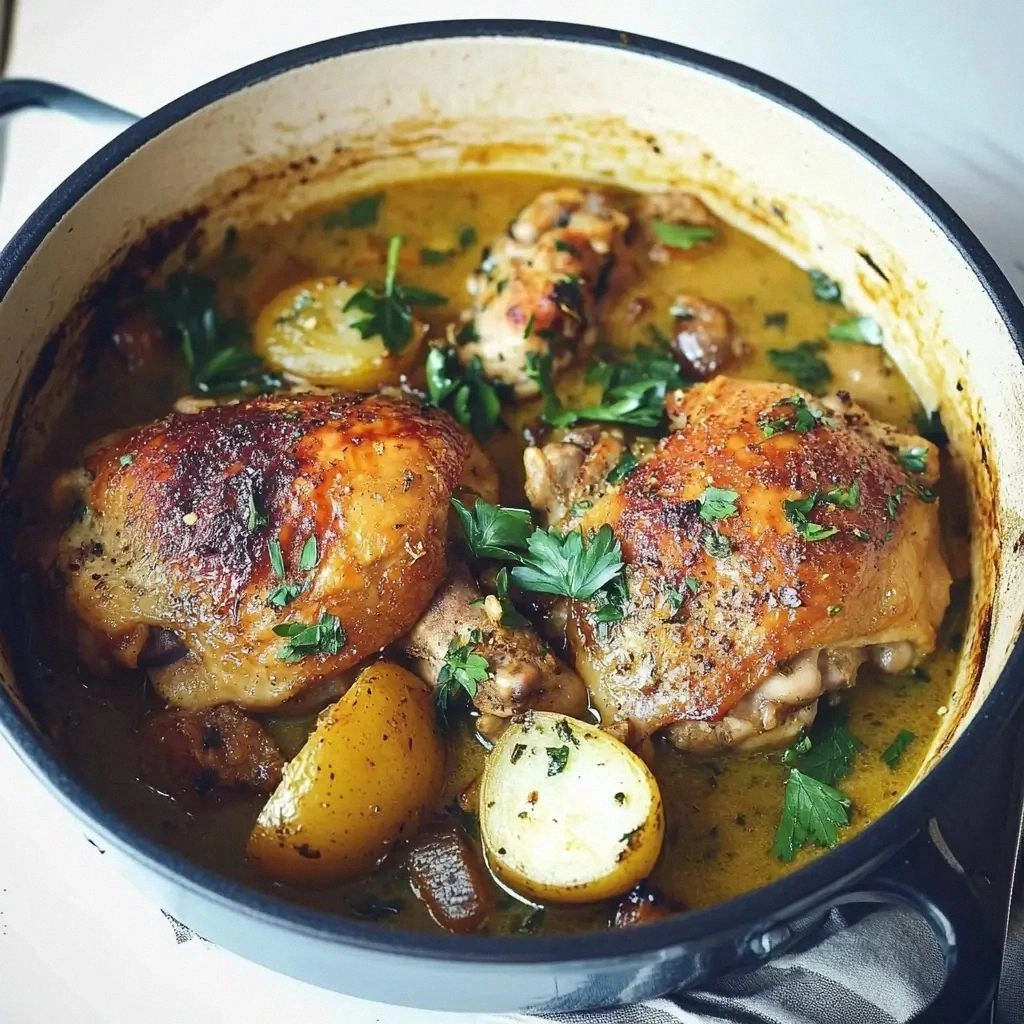
- Heat a large Dutch oven over medium‑high heat. Add 1 tablespoon of butter and 1 tablespoon of olive oil, letting the butter foam without browning. When the butter turns a golden hue, add the chicken thighs skin‑side down and sear for 4 minutes. Flip and sear the other side for 3 minutes. This step locks in juices and creates a caramelized crust that will carry flavor throughout the dish. I’ve seen people skip searing and end up with a flat, bland result.
- Remove the chicken and set aside. In the same pot, add diced onion, carrots, and celery. Sauté for 5 minutes until the vegetables start to soften and the onions become translucent. The vegetables will form the base of the sauce, so give them time to develop a slight caramelization. That sizzle when it hits the pan? Absolute perfection.
- Add minced garlic and cook for 30 seconds until fragrant. Be careful not to let it burn, or the dish will taste bitter. This is the moment of truth—garlic’s aroma should be unmistakable, not sharp.
- Deglaze the pot with 1 cup of dry white wine, scraping up any browned bits with a wooden spoon. Let the wine reduce by half, about 3 minutes, before adding the chicken back to the pot. Those deglazed bits are the flavor treasure trove; don’t let them sit on the bottom of the pot.
- Pour in 2 cups of chicken broth, then stir in 2 teaspoons of fresh thyme leaves, 1 bay leaf, 1 teaspoon of Dijon mustard, and 1 tablespoon of lemon zest. Return the chicken thighs to the pot, skin side up. The mixture should be just enough liquid to cover the bottom of the pot; the chicken should not be fully submerged.
- Cover the pot and reduce the heat to low. Simmer for 30 minutes, turning the chicken halfway through to ensure even cooking. The sauce should thicken slightly and the chicken should be tender and juicy. Keep an eye on the liquid level—add a splash of water if it looks like it’s drying out.
- Once the chicken is cooked, remove it from the pot and let it rest for 5 minutes. While resting, increase the heat to medium and reduce the sauce for 5 minutes, stirring frequently until it reaches a silky consistency. The sauce should coat the back of a spoon without dripping.
- Return the chicken to the pot, stir in 2 tablespoons of fresh parsley, and give everything a final gentle toss. Serve immediately, garnished with extra parsley if desired. The aroma at this point will make you want to hug the dish.
That's it — you did it. But hold on, I've got a few more tricks that'll take this to another level...
Insider Tricks for Flawless Results
The Temperature Rule Nobody Follows
Many people think the key to a great sauce is high heat, but the secret lies in low, steady simmering. Maintaining a gentle heat allows the flavors to meld without scorching the broth or over‑cooking the chicken. I’ve seen even professional chefs skip this step, resulting in a dish that’s either too watery or too thick.
Why Your Nose Knows Best
Before you add the final herbs, pause and sniff the sauce. A well‑balanced broth should have a faint, sweet aroma from the mirepoix, a sharp hint of garlic, and a subtle citrus tang from the lemon zest. If the smell leans too much toward one element, adjust accordingly—more herbs, a splash of wine, or a dash of lemon juice.
The 5‑Minute Rest That Changes Everything
Allowing the chicken to rest after cooking lets the juices redistribute, ensuring every bite is moist. Skipping this step can leave the meat dry and less flavorful. I’ve had guests ask if the dish is too greasy; the rest period actually reduces the perception of greasiness by letting the fat settle.
Use a Heavy‑Bottomed Pot for Even Heat
A heavy pot like cast iron or a thick‑bottomed Dutch oven distributes heat evenly, preventing hot spots that can scorch the bottom. If you’re using a thinner pot, keep the heat moderate and stir frequently to avoid burning. I’ve tried this with a stainless steel pot and ended up with a burnt bottom—no thanks!
Finishing with Fresh Herbs, Not Dried
Fresh parsley adds brightness and a pop of color that dried herbs cannot match. Dried herbs lose potency over time and can give the dish a stale flavor. I’ve swapped dried thyme for fresh in the past, and the difference in aroma is like night and day.
Creative Twists and Variations
This recipe is a playground. Here are some of my favorite ways to switch things up:
Smoky Chipotle Twist
Add a tablespoon of chipotle in adobo sauce during the simmering stage. The smoky heat pairs beautifully with the acidity of the wine and brightens the dish for a Southwestern flair.
Creamy Mushroom Medley
Replace the carrots with sliced mushrooms and add a splash of heavy cream after the sauce has reduced. The earthy mushrooms and velvety cream create a luxurious, comforting version.
Herb‑Infused Chicken
Marinate the chicken thighs in a mixture of rosemary, thyme, and lemon zest for 2 hours before cooking. The herbs penetrate the meat, delivering a deeper flavor that’s almost aromatic.
Lemon‑Garlic Zest Variation
Omit the Dijon mustard and replace it with a generous amount of lemon zest and a squeeze of fresh lemon juice. The citrus becomes the star, making this dish perfect for a light, refreshing meal.
Vegetarian Version
Swap the chicken for thick slices of seared portobello mushrooms and use vegetable broth instead of chicken broth. The mushrooms absorb the sauce, delivering a meaty texture that satisfies.
Spicy Cajun Flair
Add a teaspoon of Cajun seasoning to the mirepoix and a pinch of cayenne pepper to the sauce. The heat balances the richness and adds a bold, Southern twist.
Storing and Bringing It Back to Life
Fridge Storage
Cool the dish to room temperature, then transfer it to an airtight container. Store in the refrigerator for up to 3 days. The sauce will thicken slightly as it cools; reheat gently on the stove, adding a splash of water to loosen it.
Freezer Friendly
Pack the chicken and sauce separately in freezer‑safe containers. The chicken can be frozen for up to 2 months, and the sauce for up to 1 month. Thaw overnight in the refrigerator before reheating.
Best Reheating Method
Reheat on low heat, stirring frequently. Add a tiny splash of water or broth to keep the sauce from drying out. When the sauce is heated through, garnish with fresh parsley and serve immediately.