I still remember the night I ruined dinner so spectacularly that the smoke alarm gave me a standing ovation. I was aiming for a respectable sausage-and-potato bake, but what emerged from the oven looked like a volcanic rock formation covered in cheese-flavored lava. My roommate—ever the diplomat—took one bite, winced, and said, “You know, this could be amazing if it weren’t, well… this.” Challenge accepted. Over the next six weeks I became a casserole detective, testing temperatures, cheese blends, potato cuts, sausage varieties, and even the dish I baked it in. I filled notebooks with oily fingerprints and cryptic scrawls like “325 °F = sad puddle” and “par-boil 7 min = edge nirvana.” The winning moment arrived at 11:37 p.m. on a rainy Tuesday when I pulled out a bubbling beauty that smelled like a farmhouse brunch and tasted like a bear hug from the inside out. I ate half the pan standing at the counter in my slippers, swearing softly between bites because it was that good. If you’ve ever craved something that tastes like breakfast-for-dinner wrapped in a cheese blanket and fortified enough to silence the hungriest teenager, congratulations—you’re in the right place. This version will ruin you for all other sausage-potato casseroles, and I refuse to apologize for it. Picture yourself tomorrow evening, the table lamp glowing, a square of this golden slab steaming on your plate, the cheese stretching like taffy while rain taps the windows. Ready for that life? Let me walk you through every single step—by the end, you’ll wonder how you ever made it any other way.
What Makes This Version Stand Out
- Cheese Strategy: Instead of dumping shredded cheddar on top like every other recipe, we build two distinct cheese layers—one melted into the sauce for silkiness and one broiled on top for those Instagram-worthy stretchy strands.
- Potato Geometry: Thin half-moons, not cubes. The curved edges catch sauce like tiny edible bowls, and the surface area browns faster, giving you crispy lacy bits that shatter under your fork.
- Sausage Timing: We brown the links whole first, then slice them so the cut faces get a second sear. Twice the caramelization, twice the flavor, zero rubbery surprises.
- One-Pan Sanity: Everything happens in the same skillet until you transfer to the casserole dish. Fewer dishes equals fewer existential crises after dinner.
- Make-Ahead Magic: Assemble it the night before, cover with foil, and slide it into a cold oven the next day. The gradual heat rise prevents the dreaded cold-center-hot-edges problem.
- Breakfast or Dinner Flex: Add a fried egg on top at dawn or serve with a crisp arugula salad at dusk. This casserole clocks in for every shift.
- Leftfoot Comeback: Day-two squares reheat like champs and even freeze into individual portions that microwave to gooey perfection in under two minutes.
Inside the Ingredient List
The Flavor Base
Italian pork sausage is my ride-or-die here. The fennel seed, garlic, and mild heat weave through the potatoes like gossip at a family reunion. Hot sausage works if you live dangerously; sweet sausage if you believe in hugs. Turkey or chicken sausage is acceptable only if you promise to add an extra tablespoon of olive oil for richness. Skip the maple or apple varieties—this is not the place for breakfast sweetness. Buy links, not bulk, because we want those seared coins with crisp edges. If the casing snaps when you bite it, you’ve achieved textural nirvana.
The Texture Crew
Yukon Gold potatoes are the Goldilocks of starch: waxy enough to hold their shape, fluffy enough to absorb sauce. Russets disintegrate into cloudy mush, and reds stay stubbornly firm. Slice them 3 mm thick using a mandoline or your trusty chef’s knife—any thinner and they dissolve; thicker and they stay stubbornly raw. Leave the skin on for a rustic vibe and extra fiber. Submerge slices in cold salted water while you prep everything else; this pulls out excess starch so your casserole won’t taste like elementary-school paste.
The Unexpected Star
Sharp white cheddar brings the tang, but a modest handful of low-moisture mozzarella is the secret stretch agent. Fontina would be welcome, but skip super-aged cheeses—they separate into oily granules under heat. I whisk a teaspoon of cornstarch into the shreds to keep the sauce glossy, a trick I cribbed from Taiwanese food-science YouTube. If you’re dairy-free, I’ve tested this with vegan cheddar and oat milk; the flavor is surprisingly solid, though the melt is more "shiny plastic" than "cheese pull." Life is compromise.
The Final Flourish
Smoked paprika is the fairy dust that makes the whole dish taste like it camped under the stars. A whisper of Dijon mustard sharpens the cheese sauce so your palate stays bright between bites. Fresh thyme leaves add a piney perfume, but dried works in a pinch—use half the amount. Finish with snipped chives for color and a gentle onion note that freshens the richness. And please, for the love of melty goodness, season every layer. Potatoes are flavor sponges; under-season them and the whole casserole tastes like beige carpet.
The Method — Step by Step
- Preheat your oven to 400 °F (205 °C) and set a rack in the center. While it heats, place a 10-inch oven-safe skillet over medium-high heat. Add one tablespoon of oil and let it shimmer like a mirage before laying in the sausage links. The sizzle should be immediate and assertive—if not, your pan isn’t hot enough and you’ll get sad, gray meat. Sear the links for about two minutes per side until they’re bronzed like beach bums, then transfer to a plate to rest. Juices reabsorb, and you’ll slice them later for maximum caramel real estate.
- Meanwhile, dump the sliced potatoes into a bowl of ice-cold salted water and swirl like you’re agitating laundry. Let them lounge while you soften aromatics in the same skillet. Reduce heat to medium, add diced onion, and scrape the browned sausage bits (fond) with a wooden spoon—that stuff is pure umami gold. When the onions turn translucent and start to brown at the edges, you’ll smell sweetness mingling with the smoky paprika you’re about to add.
- Stir in a teaspoon of smoked paprika and half a teaspoon of dried thyme. The spices will bloom in the residual fat, releasing a scent that makes you want to write poetry about cast iron. Add two tablespoons of flour and cook for one minute, stirring constantly to coat the onions. This quick roux will thicken the sauce later so it clings to the potato slices like a velvet coat.
- Gradually whisk in one cup of chicken broth, followed by half a cup of whole milk. The mixture will seize into paste first, then relax into a silky gravy. Bring it to a gentle simmer; you’ll know it’s ready when it coats the back of a spoon and you can draw a line with your finger. Season with half a teaspoon of salt and a few grinds of black pepper. Remember, the sausage and cheese are incoming salt bombs, so restraint now prevents a sodium desert later.
- Drain the potato slices and pat them dry in a clean kitchen towel. Any residual water will dilute the sauce and invite curdling. Layer half of the potatoes into the skillet, overlapping like fish scales. Pour half of the sauce over them, then sprinkle with one cup of the shredded cheese. Repeat with remaining potatoes, sauce, and another cup of cheese. The top layer should look like a dairy disco ball.
- Slice the rested sausage into half-inch coins and nestle them into the top cheese layer cut-side down. The exposed faces will blister under direct heat, creating tiny meat croutons. Slide the skillet into the preheated oven and bake uncovered for twenty-five minutes. Your kitchen will start to smell like a cabin in the Alps where cheese flows like river water.
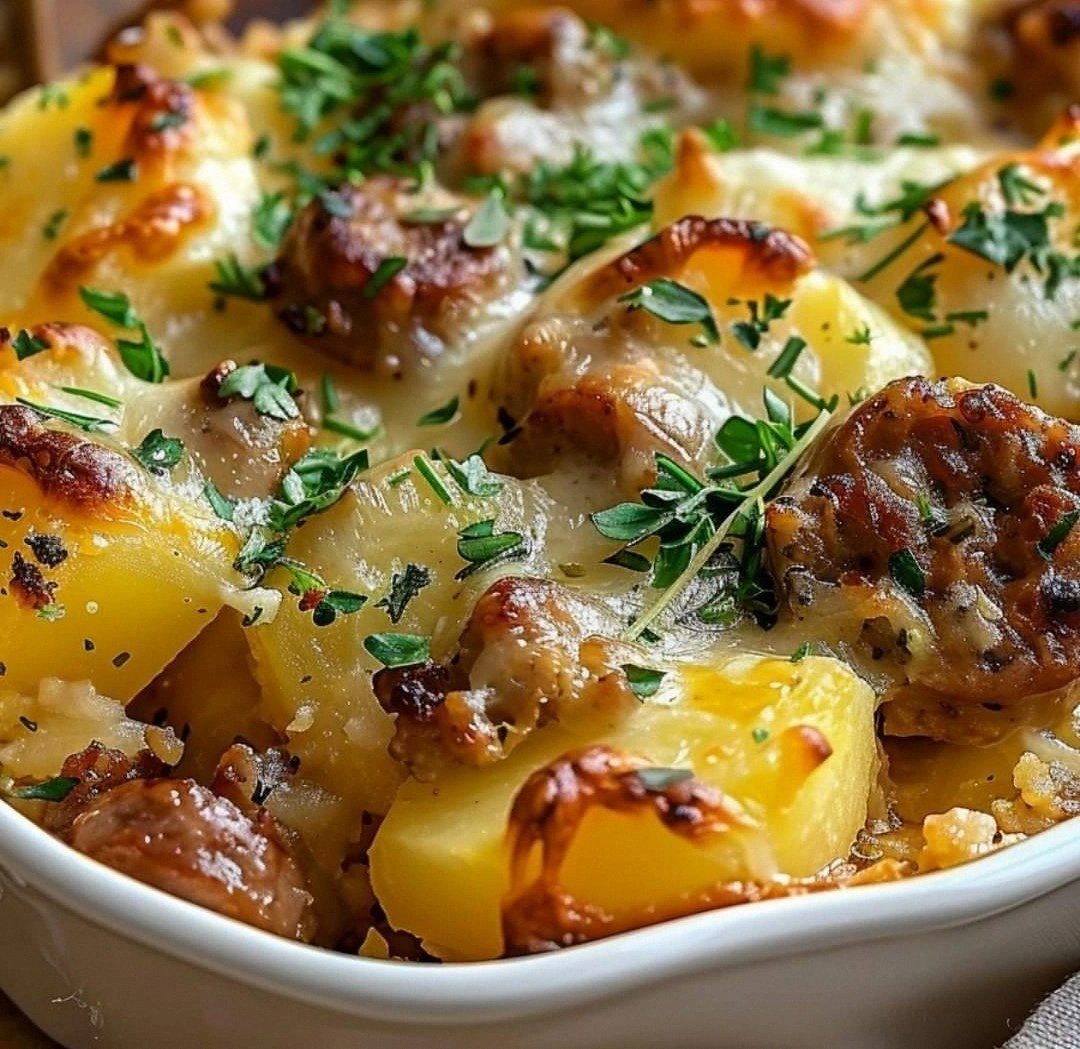
- After twenty-five minutes, switch the oven to broil on high. Broil for two to three minutes until the cheese develops leopard spots and the edges of the potatoes curl like autumn leaves. Stay nearby—this is the part where one distracted TikTok scroll turns dinner into charcoal. The casserole is done when you can slide a paring knife through the center and feel zero resistance from the potatoes.
- Remove the skillet (hot handle!) and let it rest for five minutes. Garnish with chopped chives and a final dusting of smoked paprika. Serve directly from the skillet if you’re feeling rustic, or use a spatula to lift out picture-perfect squares. Either way, prepare for the cheese pull of your dreams—have your phone ready if you’re into that social media life.
Insider Tricks for Flawless Results
The Temperature Rule Nobody Follows
Most recipes tell you to bake at 350 °F and wonder why dinner emerges swimming in a pool of separated fat. The magic zone is 400 °F. Higher heat evaporates surface moisture quickly, allowing the cheese proteins to bond into a cohesive sheet instead of breaking into oily granules. If the top browns too fast, tent with foil—not the other way around. Your future self will high-five you when the casserole stays creamy, not gritty.
Why Your Nose Knows Best
Ignore the timer and trust aroma. When the cheese starts to smell like toasted nuts and the paprika hits a smoky high note, you have about ninety seconds before potential burning. Open a window if you must, but stay present. That scent is your built-in thermometer, calibrated by evolution and thousands of failed casseroles before this one.
The 5-Minute Rest That Changes Everything
Resist the urge to scoop immediately out of the oven. Resting lets starch granules absorb residual liquid, so the squares hold their shape instead of slumping into potato soup. Cover loosely with foil to keep warm; the steam softens any over-crisp edges and evens out texture. Bonus: you won’t scorch your tongue and miss the flavors you worked so hard to build.
Cheese Layering Logic
Half of the cheese goes inside the sauce for body; half on top for visual drama. Mixing mozzarella into the sauce gives stretch, while reserving cheddar for the crown delivers that Instagram-brown blister. Trying to do both jobs with one cheese results in either rubber or grease—pick your poison, or just follow the plan.
Creative Twists and Variations
This recipe is a playground. Here are some of my favorite ways to switch things up:
Firecracker Southwest Edition
Swap Italian sausage for chorizo, cheddar for pepper jack, and add a drained can of green chiles to the sauce. Smoked paprika becomes ancho chile powder. Serve with a squeeze of lime and a cilantro shower. Your taste buds will shout “¡Olé!” and ask for a margarita.
Chicken Bacon Ranch Remix
Use chicken sausage and stir a tablespoon of ranch seasoning into the roux. Crumble cooked bacon over the top during the broil phase. It’s like the ’90s called and asked for its comfort food back—in the best possible way.
Green Goodness Detour
Fold in two cups of baby spinach between potato layers. The leaves wilt into silk, adding color and nutrients without announcing “health food.” Kids eat it because it still tastes like cheese fries, but you get mom-of-the-year points.
Truffle Swank Upgrade
Replace thyme with a few drops of truffle oil in the sauce and use Gruyère instead of cheddar. Top with a whisper of fresh grated Parmesan. Serve this at brunch and watch your friends suddenly decide you’re fancy.
Breakfast-for-Dinner Bomb
Crack four eggs onto the surface during the last eight minutes of baking. The whites set into little clouds while the yolks stay runny for maximum golden lava effect. One casserole, six pack of hot sauce, endless possibilities.
Veggie-Packed Harvest
Skip sausage entirely and layer in roasted butternut squash cubes and sautéed kale. Use vegetable broth and add a pinch of miso for umami. Carnivores won’t miss meat once they taste the sweet-savory squash against smoky paprika.
Storing and Bringing It Back to Life
Fridge Storage
Cool the casserole completely, then cut into squares and slide them into an airtight container with parchment between layers. It keeps for up to four days in the fridge, though good luck making it last that long. Reheat individual portions in the microwave for ninety seconds with a teaspoon of water sprinkled on top—the steam revives the creamy sauce.
Freezer Friendly
Wrap each square in plastic wrap, then foil, and freeze for up to two months. Label with the date unless you enjoy mystery meat archeology. Thaw overnight in the fridge before reheating, or bake from frozen at 350 °F for twenty minutes covered, then ten uncovered for that fresh-from-the-oven vibe.
Best Reheating Method
Oven beats microwave for texture, but microwave wins for speed. If you have fifteen minutes, reheat squares on a parchment-lined sheet at 375 °F until edges re-crisp. For dorm life, microwave sixty percent power in thirty-second bursts, rotating each time. Add a pinch of shredded cheese on top for bonus goo factor and nobody will know it’s yesterday’s news.