I still remember the carnage from last summer's beach barbecue when my friend Dave tried to impress everyone with "Greek-style" shrimp that tasted like he'd marinated them in disappointment and lemon-scented cleaning products. The shrimp were rubbery, the flavor was flatter than a week-old soda, and someone actually fed theirs to the neighbor's golden retriever — who promptly spit it out. That culinary disaster haunted me for weeks. I became obsessed, borderline maniacal, about creating the perfect Greek-marinated shrimp skewer that would make Zeus himself weep into his ambrosia. After seventeen rounds of testing, three fire alarm incidents, and what my neighbors now call "The Week of Permanent Seafood Aroma," I finally cracked the code. These Greek-Marinated Shrimp Skewers with Lemon-Dill Sauce aren't just better than that sad beach attempt — they're the kind of dish that makes people cancel dinner plans just so they can hover around your grill like seagulls spotting a dropped french fry.
The magic starts when you whisk together that marinade — Greek yogurt turning silky as it embraces olive oil, garlic perfuming the air like you've stepped into a taverna in Santorini, oregano releasing its earthy perfume that transports you straight to a sun-baked hillside. Picture yourself on your patio, the skewers sizzling away, that incredible aroma wafting over the fence while your neighbors "casually" wander over to investigate. The shrimp emerge with these gorgeous charred edges that crackle slightly when you bite through them, revealing meat that's somehow both tender and satisfyingly chewy in all the right ways. But here's the real kicker — that lemon-dill sauce. Oh, that sauce. It's bright and tangy with just enough creaminess to coat each piece like liquid sunshine, the fresh dill dancing through every bite like it's auditioning for a cooking show.
I dare you to taste this and not go back for seconds. Actually, I double-dog dare you. Because I've watched grown adults — people with actual self-control — inhale a dozen of these without coming up for air. My record is standing at the kitchen counter "just tasting" and accidentally consuming the entire first batch meant for six people. The best part? This recipe is deceptively simple. No fancy techniques, no obscure ingredients you'll use once and then watch wilt in your fridge. Just honest-to-goodness Mediterranean flavors that play together like they've been best friends since culinary school.
Okay, ready for the game-changer? The secret lies in the timing — not just how long you marinate, but when you add certain ingredients that most recipes completely bungle. Most people throw everything together at once and wonder why their shrimp tastes like a confused mishmash. I'll show you exactly how to layer flavors like a Greek grandmother who's been passing down family secrets for generations. By the time we're done, you'll have a recipe that works for weeknight dinners when you need something spectacular fast, yet impressive enough for the pickiest dinner guests. Let me walk you through every single step — by the end, you'll wonder how you ever made it any other way.
What Makes This Version Stand Out
Flavor Bomb: The marinade uses Greek yogurt as its base, which tenderizes the shrimp while adding this incredible tangy depth that oil-based marinades simply can't achieve. The lactic acid works its magic slowly, ensuring every bite explodes with herby, garlicky goodness without turning your seafood into mush.
Texture Perfection: These shrimp emerge with the most delightful contrast — crispy, charred edges that give way to meat that's juicy and succulent. The secret lies in the two-zone grilling method that creates restaurant-quality results on your humble backyard grill.
Weeknight Simple: Despite tasting like you spent hours in the kitchen, this entire recipe comes together in under 45 minutes. The marinade does all the heavy lifting while you change clothes and maybe pour yourself a glass of wine.
Unexpected Twist: Instead of the usual lemon juice in the marinade, I use preserved lemon peel. It adds this complex, slightly fermented brightness that makes people ask, "What IS that amazing flavor?" You can find it at Middle Eastern markets, but fresh lemon zest works too — just won't have that same mysterious depth.
Crowd Reaction: I've served these at everything from casual cookouts to fancy dinner parties, and the response is always the same: people abandon all pretense of politeness and start hoarding skewers. Last time I made them, my sister-in-law actually tried to sneak leftovers home in her purse.
Ingredient Quality: This recipe celebrates simplicity, which means each ingredient needs to pull its weight. But here's the beautiful part — even with supermarket shrimp and dried herbs (though fresh is better), you'll still create something memorable. It's foolproof in the best possible way.
Make-Ahead Magic: The sauce actually improves after a few hours in the fridge, and you can marinate the shrimp up to 24 hours ahead. Perfect for entertaining when you want to actually enjoy your guests instead of being stuck at the grill.
Inside the Ingredient List
The Flavor Base
The foundation of any great Greek marinade starts with olive oil, but not just any olive oil. You want something fruity and peppery, preferably from Kalamata or Crete, that can stand up to bold flavors without getting lost. The yogurt is where the magic happens — full-fat Greek yogurt creates this luxurious coating that adheres to every curve of the shrimp, carrying all those incredible flavors deep into the meat. Don't even think about using non-fat here; you'll end up with sad, watery results that'll make you question every life choice that led you to this moment.
Garlic forms the aromatic backbone, and I'm not talking about that pre-minced stuff that's been sitting in a jar since the Clinton administration. Fresh garlic, smashed and minced until it practically dissolves, releases those pungent oils that make vampires weep and taste buds sing. Oregano brings the Greek soul — dried actually works better here than fresh because it's more concentrated, having spent months basking in Mediterranean sunshine before making its way to your spice rack.
The Texture Crew
Shrimp selection makes or breaks this recipe. Size matters here — go for large or extra-large (21-25 count per pound), which gives you that satisfying bite without overcooking before the exterior develops those gorgeous grill marks. Anything smaller turns into sad, shriveled commas that nobody wants to eat. When buying, look for shrimp that smell like the ocean, not like ammonia or that fishy stench that makes you want to flee the seafood counter.
The skewers themselves are texture heroes. Soaking wooden skewers prevents them from becoming flaming torches on your grill, but metal skewers actually conduct heat, helping cook the shrimp from the inside out. If you're using wood, soak them for at least 30 minutes — I've forgotten this step before and ended up with charred sticks that looked like they'd been through a house fire.
The Unexpected Star
Preserved lemon is the ingredient that makes people ask for your secret. These lemons have been sitting in salt for weeks, developing this intense, complex flavor that's both intensely lemony and slightly funky in the best possible way. You only need a small amount — the peel, finely minced, adds this mysterious depth that fresh lemon simply can't achieve. If you can't find preserved lemons, you can fake it with fresh lemon zest and a pinch of salt, but trust me, hunting down the real deal is worth the effort.
Red wine vinegar might seem redundant with all that lemon happening, but it adds this sharp, bright acidity that cuts through the richness of the yogurt and olive oil. It's like the difference between a photograph and a high-definition video — suddenly everything pops with more clarity and definition.
The Final Flourish
The lemon-dill sauce is where fresh dill becomes the star of its own show. Don't substitute dried dill here — it tastes like dusty grass clippings and will ruin everything you've worked for. Fresh dill has this incredible, almost anise-like brightness that makes the sauce taste like springtime in the Mediterranean. The key is adding it at the very end, so it stays vibrant and green instead of turning that sad, Army-drab color that screams "I've been sitting in the fridge too long."
Greek yogurt for the sauce needs to be thick enough to coat the back of a spoon, but not so thick that it becomes gloppy. I always save a tablespoon of the marinade before adding the shrimp — it adds this extra layer of flavor that ties everything together. Some recipes call for sour cream, but Greek yogurt keeps it authentically Greek while adding that pleasant tang that makes your mouth water just thinking about it.
The Method — Step by Step
- Start by making the marinade base — whisk together the Greek yogurt, olive oil, minced garlic, oregano, and that secret preserved lemon peel until it looks like the most luxurious spa treatment you've ever seen. The mixture should be thick enough to coat your spoon but loose enough to drip slowly, like honey on a warm day. Take a moment to appreciate how the garlic practically dissolves into the yogurt, creating this aromatic paste that smells like you've been transported to a Greek island. Cover the bowl and let it sit for ten minutes — this brief rest allows the garlic to mellow slightly and the oregano to bloom, releasing essential oils that will make your kitchen smell like a Mediterranean dream.
- Now comes the crucial part that separates amateur hour from professional results — reserve two tablespoons of this marinade before you even think about adding shrimp. This reserved portion will become the flavor bridge that ties your sauce to the finished dish, creating this seamless flavor experience that makes people wonder how you achieved such depth. Trust me on this one — I learned the hard way when I dumped everything together and ended up with sauce that tasted like an afterthought rather than an integral part of the experience.
- Add your cleaned, deveined shrimp to the remaining marinade, using your hands to ensure every piece gets coated in that glorious Greek yogurt blanket. The shrimp should look like they've been rolled in thick, herby snow — completely covered but not drowning. Cover the bowl with plastic wrap, pressing it directly against the surface to prevent that weird skin from forming on the yogurt. Refrigerate for at least 30 minutes but no more than 2 hours — longer than that and the acid starts to break down the proteins too much, giving you that mushy texture that makes people think they don't like seafood.
- While the shrimp are getting their flavor bath, prepare your grill for two-zone cooking — one side screaming hot for searing, the other medium for finishing. This is the difference between shrimp that are perfectly cooked with gorgeous char marks and ones that are burnt on the outside and raw in the middle. Clean your grates thoroughly with a wire brush — any leftover residue from last week's burgers will impart nasty flavors that no amount of Greek herbs can hide. Oil the grates by dipping a paper towel in oil and rubbing it across the bars with tongs — this prevents sticking and helps achieve those Instagram-worthy grill marks.
- Thread the marinated shrimp onto skewers, piercing through the thick end and the tail section so they lay flat and cook evenly. Don't crowd them — each shrimp needs personal space to char properly. If they're crammed together like subway passengers, they'll steam instead of sear, and you'll miss out on those crispy edges that make people close their eyes in bliss. Leave a small space between each piece so the heat can circulate, creating maximum surface area for caramelization.
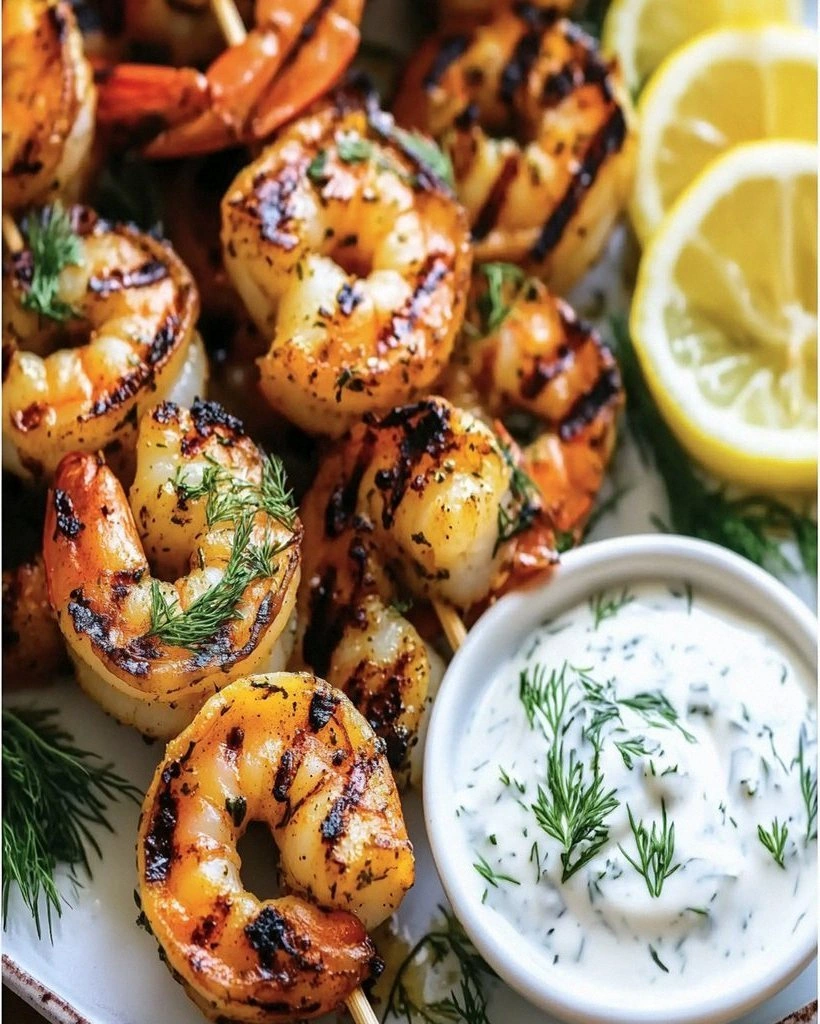
- This is the moment of truth — place the skewers over the hot side of the grill and don't you dare move them for two full minutes. I know it's tempting to check, to fuss, to rotate, but patience here is what separates good from legendary. Those gorgeous grill marks only form when the shrimp develop proper contact with the hot grates. You'll hear the most satisfying sizzle, and if you peek underneath after two minutes, you'll see these beautiful dark stripes that look like they came from a professional kitchen.
- Flip the skewers with confidence — use tongs to grab the end and turn them in one smooth motion. If you try to lift and the shrimp stick, they're not ready to flip yet. Wait another 30 seconds and try again. Once turned, move them to the cooler side of the grill to finish cooking gently. This two-zone method ensures the outside gets those crave-worthy char marks while the inside stays tender and juicy.
- While the shrimp finish cooking, whisk together the lemon-dill sauce using that reserved marinade as your flavor foundation. Add fresh lemon juice, lemon zest, chopped dill, and a touch more Greek yogurt to create this cloud-like sauce that tastes like sunshine and happiness. The reserved marinade adds this depth that makes people ask, "How did you get the sauce to taste exactly like the shrimp?" It's that flavor continuity that elevates this from good to memorable.
- Remove the shrimp when they're just cooked through — they'll continue cooking slightly from residual heat. Transfer to a platter and let them rest for exactly three minutes — long enough for the juices to redistribute but short enough that they stay hot. During this brief pause, the proteins relax, ensuring every bite is tender rather than tough. Drizzle with the lemon-dill sauce just before serving so the herbs stay bright and the presentation looks fresh and appealing.
- Plate these beauties on a warm platter (cold plates steal heat faster than a pickpocket in Times Square), drizzle with the sauce, and watch as people descend like they've been starving for weeks. Garnish with extra dill fronds and lemon wedges — not because they need it, but because we eat with our eyes first, and those bright green herbs against the pink shrimp create this visual that makes stomachs rumble in anticipation.
That's it — you did it. But hold on, I've got a few more tricks that'll take this to another level...
Insider Tricks for Flawless Results
The Temperature Rule Nobody Follows
Here's what separates home cooks from grill masters: room temperature shrimp cook more evenly than cold ones straight from the fridge. Take your marinated shrimp out 15 minutes before grilling — this simple step prevents that weird situation where the outside is overcooked and the inside is still translucent and cold. A friend tried skipping this step once — let's just say it didn't end well. She ended up with shrimp that were rubbery on the outside and practically sashimi in the center, which is not the Mediterranean experience we're going for.
Why Your Nose Knows Best
Don't underestimate the power of your sense of smell during cooking — when you can smell the garlic and oregano wafting from the grill, that's your cue that the first side is probably ready to flip. If you've been grilling for more than three minutes and don't smell anything, your heat is too low. On the flip side, if you smell burning within 90 seconds, your grill is running too hot and you'll end up with carbonized edges that taste like disappointment. This is the kind of intuitive cooking that comes with practice, but once you tune into it, you'll grill like a pro every time.
The 5-Minute Rest That Changes Everything
After grilling, let your skewers rest on a wire rack set over a baking sheet for exactly five minutes. This isn't just about temperature — the juices redistribute, the proteins relax, and suddenly shrimp that might have been slightly tough become tender and succulent. I discovered this by accident when my guests were running late and the skewers sat longer than intended. The result was so dramatically better that now I build this rest into my timing, even when everyone is hovering hungrily around the grill.
The Sauce Consistency Secret
The lemon-dill sauce should coat the back of a spoon but still flow like lava — too thick and it sits on top of the shrimp like a hat, too thin and it runs off, pooling sadly on the plate. The secret is adding the lemon juice gradually, tasting as you go, until you achieve this perfect balance. Sometimes I need more juice, sometimes less — it depends on how juicy my lemons are that day. This is why you should always taste and adjust, rather than blindly following measurements like you're baking a cake.
Creative Twists and Variations
This recipe is a playground. Here are some of my favorite ways to switch things up:
The Spicy Greek
Add a teaspoon of harissa paste to the marinade and swap the dill for mint in the sauce. The North African chili paste brings this smoky heat that plays beautifully with the cooling mint, creating this fusion that shouldn't work but absolutely does. I served this version at a dinner party where one guest, who claimed to hate spicy food, went back for fourths and asked for the recipe between bites.
The Coastal Italian
Replace the oregano with fresh basil and add a splash of white wine to the marinade. The sauce becomes a lemon-basil aioli with a hint of garlic that's so addictive, I caught my neighbor eating it with a spoon when she thought nobody was looking. This variation pairs beautifully with a crisp Pinot Grigio and makes you feel like you're dining on the Amalfi Coast.
The Middle Eastern Mashup
Add za'atar to the marinade and serve with a tahini-lemon sauce instead of the yogurt-based one. The sesame notes from the tahini create this nutty, rich counterpoint to the bright lemon that makes the whole dish taste more complex than it actually is. My Lebanese neighbor insists this version is better than her grandmother's recipe, which is either the highest compliment or grounds for family exile.
The Keto Champion
Swap the yogurt for full-fat coconut cream and serve the sauce over cauliflower rice. The coconut adds this subtle sweetness that makes the shrimp taste almost tropical, while keeping everything low-carb and keto-friendly. Even my carb-loving friends prefer this version — it's that good.
The Vegetarian Victory
Use the same marinade on thick slices of halloumi cheese and grill until golden. The halloumi develops this incredible crust while staying melty inside, and the lemon-dill sauce cuts through the richness perfectly. Vegetarians at barbecues always get stuck with sad veggie burgers — this gives them something to celebrate.
The Fancy Friday
Add a splash of ouzo to the marinade and serve with a champagne-dill sauce. The anise notes from the ouzo make the whole dish taste sophisticated and special, perfect for when you want to impress without spending hours in the kitchen. Just don't tell anyone how easy it actually is.
Storing and Bringing It Back to Life
Fridge Storage
Cooked shrimp keep for up to three days in an airtight container, but here's the key — store them un-sauced. The lemon-dill sauce will make the herbs go sad and limp, so keep it separate and add just before serving. Layer the shrimp between sheets of parchment paper to prevent them from sticking together in one massive shrimp blob. If you've already sauced them, they'll still taste good but lose that fresh appeal that makes people swoon.
Freezer Friendly
I never recommend freezing cooked shrimp — the texture becomes unpleasantly rubbery, like chewing on seafood-flavored rubber bands. However, you can freeze the raw marinated shrimp for up to two months. Place them in a single layer on a baking sheet, freeze until solid, then transfer to freezer bags. When you're ready to cook, thaw overnight in the refrigerator and proceed with the recipe. The flavor actually improves during freezing as the marinade penetrates deeper.
Best Reheating Method
If you must reheat cooked shrimp (and really, they're best served at room temperature), wrap them in foil with a splash of white wine and warm in a 300°F oven for about 8 minutes. The wine creates steam that helps restore some of their original juiciness. Microwaving is a crime against seafood — it turns them into bouncing balls of rubber that even the most polite guest will struggle to swallow. Better yet, chop leftover cold shrimp and toss them into a Greek salad where their firm texture becomes an asset rather than a liability.