Picture this: you’re in the middle of a late‑night grocery run, the lights flicker, and you stumble into the kitchen with a craving that feels like a guilty secret. The fridge is a barren wasteland, but the pantry is a treasure trove of olive oil, garlic, and a handful of herbs that promise a culinary rescue. I was on a mission to turn a plain chicken breast into a showstopper, and the result was a dish that feels like a warm hug wrapped in buttery garlic and lemon zest. I dare you to taste this and not go back for seconds.
The first time I tried this, the aroma hit me like a wave—garlic sizzling, butter bubbling, and a faint citrus tang that made my eyes water in delight. The sound of the pan was a comforting hiss, and the visual of the chicken turning a golden brown was a promise of crisp edges that shatter like thin ice. I could almost taste the melt of butter coating each bite like velvet, while the lemon added a bright counterpoint that kept the flavor from tipping into heaviness. If you’ve ever struggled to find a quick yet impressive dish, you’re not alone—and I’ve got the fix.
What sets this version apart is that it’s not just a recipe; it’s a confidence boost. The combination of fresh asparagus, the subtle kick of red pepper flakes, and the Italian seasoning creates a harmony that feels both familiar and adventurous. Most recipes get this completely wrong by overcooking the chicken or underseasoning the veggies, but this one balances moisture, flavor, and texture in a way that feels effortless. Picture yourself pulling this out of the oven, the whole kitchen smelling incredible, and knowing you’ve mastered a dish that’s both simple and spectacular.
And the best part? You’ll learn a technique that most people overlook: using lemon zest not just for flavor but to brighten the butter sauce, giving it a fresh, almost citrusy sparkle that elevates the whole dish. This is hands down the best version you’ll ever make at home, and by the end of this post, you’ll wonder how you ever cooked chicken any other way. Let me walk you through every single step — by the end, you’ll wonder how you ever made it any other way.
What Makes This Version Stand Out
- Flavor: The marriage of garlic, butter, and lemon creates a sauce that coats the chicken like velvet, while the Italian seasoning adds a savory depth that feels like a well‑seasoned broth.
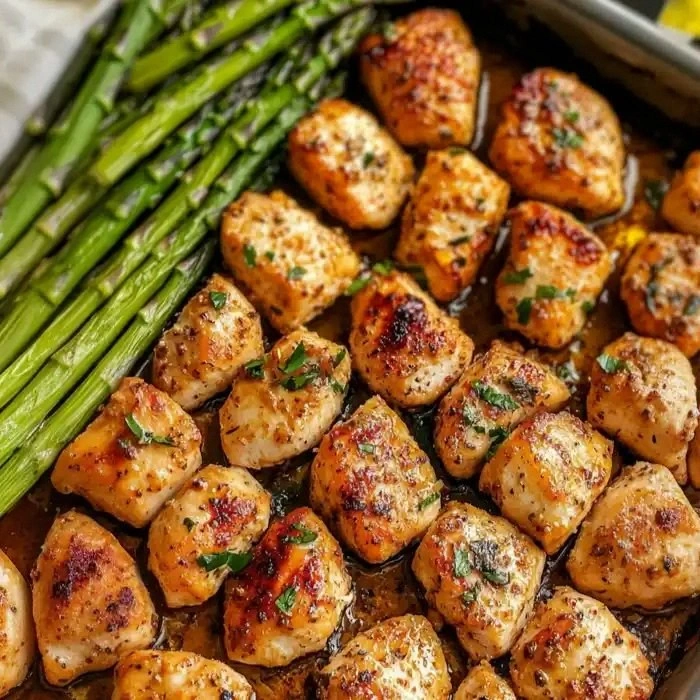
- Texture: The chicken bites finish with a crisp exterior that shatters like thin ice, while the interior remains juicy, providing a delightful contrast.
- Ingredient Quality: Using fresh asparagus and real butter ensures that every bite is rich, not synthetic.
- Time Efficiency: The entire process takes under 45 minutes, making it perfect for weeknight dinners or last‑minute guests.
- Make‑Ahead Potential: The chicken can be cooked ahead and reheated without losing flavor, making it a great prep option.
- Versatility: The dish can be served as an appetizer, main course, or side, adapting to any meal plan.
Inside the Ingredient List
The Flavor Base
Olive oil is the first thing you’ll add to the pan, acting as a canvas that allows the garlic to release its full aroma without burning. The olive oil’s subtle fruity undertone complements the butter, creating a harmonious base that carries the lemon’s bright punch. Skipping the olive oil would result in a greasy sauce that masks the delicate flavors of the chicken. If you’re looking for a healthier twist, use avocado oil for a higher smoke point and a buttery taste.
The Texture Crew
The chicken itself is the star, but its texture is shaped by how you cut and season it. Cutting into even, bite‑sized pieces ensures uniform cooking and a satisfying bite that doesn’t fall apart. The butter, when melted with garlic, creates a silky coating that clings to each piece, preventing dryness. If you prefer a crunchier bite, let the chicken rest after searing to allow the exterior to crisp up further in the oven.
The Unexpected Star
Red pepper flakes add a subtle heat that keeps the dish from feeling flat. They’re a secret weapon that elevates the overall flavor profile without overwhelming the palate. If you’re heat‑averse, reduce the flakes to a pinch or omit them entirely; the lemon and garlic will still shine. Conversely, a more adventurous cook can double the flakes for a spicy kick that pairs well with the buttery sauce.
The Final Flourish
Grated Parmesan cheese is sprinkled over the finished dish, adding a nutty finish and a touch of umami that ties everything together. The cheese’s slight saltiness balances the acidity of the lemon, while its meltability creates a silky finish. If you’re vegan or lactose intolerant, substitute nutritional yeast for a similar cheesy flavor without dairy. The final flourish is what turns a simple chicken bite into a gourmet experience.
Everything's prepped? Good. Let's get into the real action.
The Method — Step by Step
- Start by patting the chicken breasts dry with paper towels; this step is crucial for a golden sear. Slice the chicken into uniform bite‑sized pieces, roughly one inch each, to ensure even cooking. If you’re in a hurry, a food processor can quickly cube the chicken for you. Once sliced, season both sides with salt, pepper, paprika, and Italian seasoning, letting the flavors penetrate the meat.
- Heat a large skillet over medium‑high heat and pour in one tablespoon of olive oil. Let the oil heat until shimmering, then add the chicken pieces in a single layer. Avoid crowding the pan, as that will cause steaming rather than searing. Cook for 3–4 minutes on one side until a golden crust forms, then flip and cook the other side for an additional 3 minutes. The chicken should feel firm to the touch and have a beautiful brown exterior.
- Lower the heat to medium and add the minced garlic and red pepper flakes to the pan. The garlic should sizzle softly, releasing a fragrant aroma that fills the kitchen. Stir constantly to prevent burning; garlic burns quickly and turns bitter. When the garlic turns a golden hue, add the butter, letting it melt into a silky sauce that coats the chicken.
- Stir in the lemon juice and zest, letting the citrus infuse the butter and garlic. The sauce should become glossy and slightly thickened, coating the chicken evenly. Taste the sauce and adjust seasoning if necessary—add a pinch more salt or pepper to balance the acidity of the lemon. This is the moment of truth; the sauce should smell toasty and vibrant.
- While the chicken simmers in the sauce, prepare the asparagus. Trim the woody ends and place them in a separate pan with one tablespoon of olive oil, salt, and pepper. Toss to coat evenly, then spread them in a single layer on a baking sheet. Roast in a preheated oven at 400°F (200°C) for 10–12 minutes, or until tender but still crisp. The asparagus should snap when bent, indicating it’s cooked perfectly.
- Return the chicken to the skillet and stir to combine with the asparagus. Sprinkle the grated Parmesan over the mixture, allowing it to melt into the sauce for an extra layer of richness. Let everything cook together for 2–3 minutes, just enough to let the flavors meld.
- Serve the chicken and asparagus in a shallow bowl or on a platter, spooning the buttery sauce over the top. Garnish with a few extra lemon zest curls for visual pop and a final citrus burst. The dish should look glossy, with a bright green asparagus spearing a golden chicken bite.
- Enjoy immediately while the sauce is still warm and the chicken is juicy. If you’re plating for guests, arrange the pieces artfully, letting the sauce drizzle across the plate. Remember, the key to a memorable dish is to serve it hot and fresh, so don’t let it sit for too long before eating.
That's it — you did it. But hold on, I've got a few more tricks that'll take this to another level. These insider tips will help you avoid common pitfalls and elevate the flavor profile even further.
Insider Tricks for Flawless Results
The Temperature Rule Nobody Follows
Many cooks assume medium heat is enough for searing, but the truth is, a higher heat (around 375°F) gives the chicken a crispier crust and locks in juices. If you lower the heat too much, the chicken will steam instead of brown, leading to a soggy bite. I’ve seen dishes that look great on paper but fall flat in taste because of this simple mistake.
Why Your Nose Knows Best
The aroma of garlic and butter is a powerful indicator of readiness. When you smell a gentle, toasty scent, you know the butter has emulsified with the garlic and is ready for the lemon. If the smell is sharp or metallic, the garlic has burned, and the sauce will taste harsh.
The 5-Minute Rest That Changes Everything
After cooking the chicken, let it rest for five minutes before serving. This allows the juices to redistribute, keeping the meat moist. Skipping this step often results in dry, stringy chicken that feels like a disappointment.
Use Fresh Asparagus for Color
Fresh asparagus retains a vibrant green hue that looks stunning on the plate. If you only have frozen asparagus, thaw it and pat dry before cooking to avoid excess moisture that can steam the dish.
Add a Splash of White Wine
A tablespoon of dry white wine added to the pan after searing the chicken lifts the butter sauce, adding depth and acidity. The wine evaporates quickly, leaving behind a subtle, complex flavor that pairs beautifully with the lemon.
Creative Twists and Variations
This recipe is a playground. Here are some of my favorite ways to switch things up:
Smoky Chipotle Version
Swap the red pepper flakes for smoked chipotle powder and add a splash of chipotle in adobo sauce. The result is a smoky, slightly sweet heat that pairs well with the buttery chicken.
Herb‑Infused Creamy Spinach
Add a handful of fresh spinach to the skillet with the chicken and let it wilt. Finish with a drizzle of heavy cream and a sprinkle of chopped fresh basil for a creamy, herbaceous twist.
Citrus‑Garlic Shrimp Variation
Replace the chicken with shrimp for a seafood take. Use the same garlic‑butter‑lemon sauce, and cook the shrimp just until pink for a quick, elegant dish.
Spicy Thai Twist
Replace the Italian seasoning with Thai basil and add a tablespoon of fish sauce. Finish with lime juice and chopped cilantro for a vibrant, Southeast Asian flavor profile.
Parmesan‑Crusted Chicken Bites
After searing the chicken, dredge the pieces in a mixture of grated Parmesan and panko breadcrumbs before adding the butter sauce. This gives the chicken an extra crunch and a cheesy crust.
Storing and Bringing It Back to Life
Fridge Storage
Cool the dish completely, then transfer to an airtight container. Store in the refrigerator for up to 2 days. The butter sauce may thicken slightly, but a quick stir will restore its silky texture.
Freezer Friendly
Pack the chicken and asparagus separately in freezer bags, then freeze for up to 3 months. Thaw overnight in the refrigerator before reheating.
Best Reheating Method
Reheat in a skillet over medium heat, adding a splash of water or chicken broth to loosen the sauce. Stir frequently until heated through; the dish will regain its buttery sheen and fresh flavor.