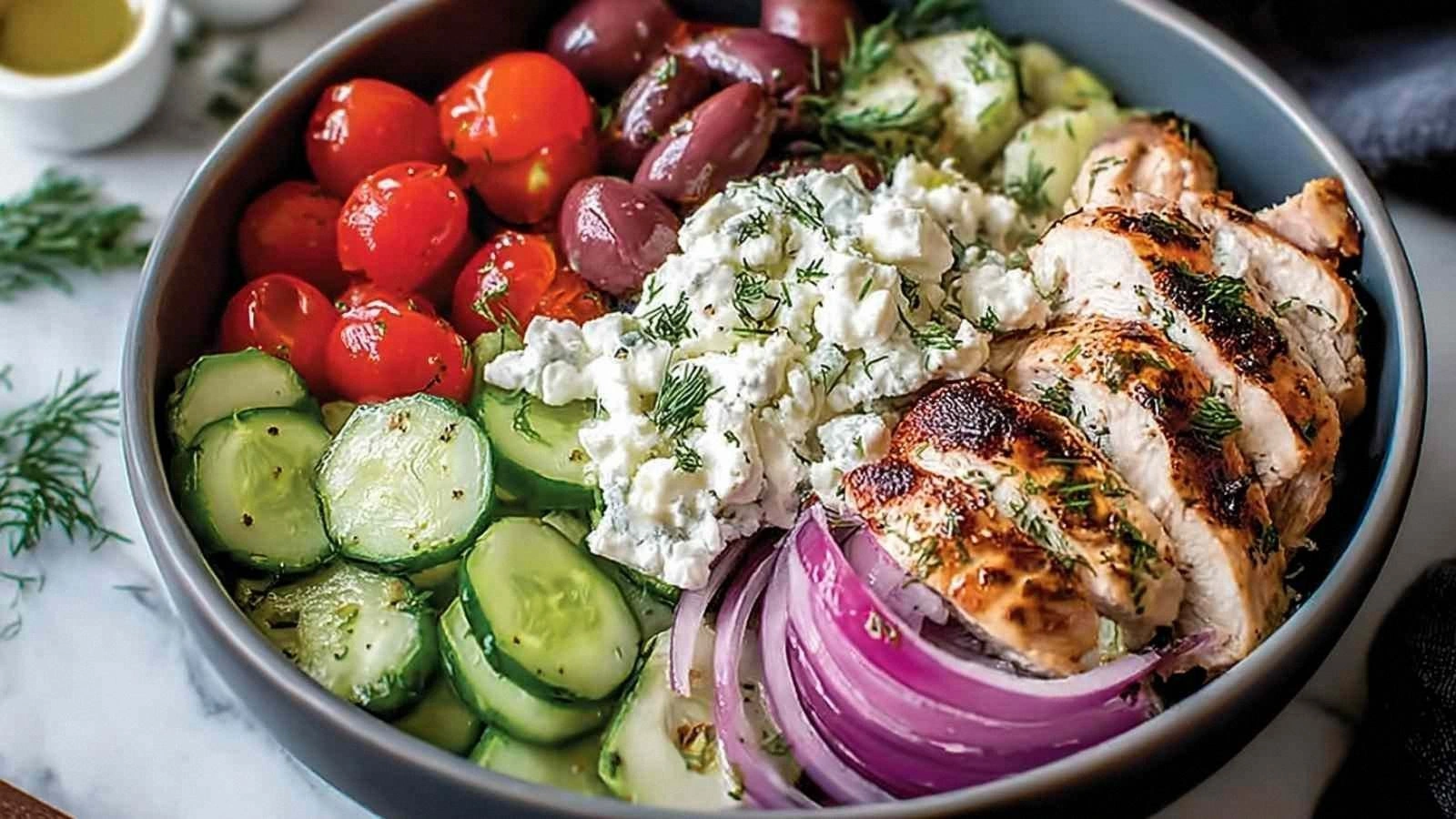
Picture this: you’re halfway through a week of bland take‑out, the fridge is a barren desert, and you’ve just opened a box of Greek yogurt with a sigh that could mean anything from nostalgia to frustration. That moment of culinary crisis is the spark that lit this recipe. I was standing there, staring at the two chicken breasts, wondering if I could ever make a Greek dish that felt both authentic and low‑carb. I decided to throw in a bold twist: a yogurt‑based sauce that coats the chicken like velvet, a burst of lemon that sings, and a splash of Kalamata olives that bring the Mediterranean to your plate. The result? A bowl that feels like a vacation in a kitchen.
Let’s talk senses. The aroma that fills the air when the chicken hits the pan is a warm, buttery note that hints at the olive oil and the Greek seasoning. The first bite is a splash of tang from the yogurt and lemon, balanced by the briny olives and the crisp bite of cucumber. The texture is a delightful contrast: tender, juicy chicken, silky sauce, crunchy vegetables, and a hint of creamy feta that melts just enough to create a rich mouthfeel. If you’ve ever felt a dish was too “plain” or “overcooked,” this bowl will shatter that notion like thin ice.
Why this version is a game‑changer. I’ve tried countless Greek chicken recipes—some rely on heavy sauces, others on dry rubs that leave the meat dry. This one is the opposite: it’s all about a creamy, bright sauce that doesn’t weigh you down. The sauce is made with Greek yogurt, lemon, garlic, and dill—ingredients that work together like a well‑tuned orchestra. The chicken is marinated briefly, then seared to lock in juices, so each bite stays moist. I dare you to taste this and not go back for seconds. Trust me, this is hands down the best version you’ll ever make at home.
But there’s a twist you won’t expect. The secret is in the double use of olive oil and red wine vinegar. One batch goes into the chicken, the other into the sauce, creating layers of flavor that dance on your palate. This subtle nuance is what separates a good bowl from a great one. The result is a dish that’s low in carbs, high in protein, and bursting with Mediterranean sunshine. Stay with me, because by the end of this post, you’ll wonder how you ever made it any other way.
What Makes This Version Stand Out
- Flavor: The yogurt‑lemon sauce is bright, tangy, and creamy, a perfect counterpoint to the savory chicken. The olive oil and oregano give a subtle earthiness that lingers on the tongue.
- Texture: Juicy chicken with a crisp sear, crunchy cucumber, and soft tomatoes create a satisfying bite that’s never monotonous.
- Low‑Carb: No rice, no potatoes—just protein, veggies, and a splash of dairy, keeping the carb count low while still filling you up.
- Authenticity: The use of Greek yogurt, dill, and Kalamata olives pulls the dish straight from a Mediterranean kitchen.
- Versatility: It’s easy to adjust the spice level, swap out veggies, or add a protein boost for a different crowd.
- Time Efficiency: From prep to plate, the entire process takes under an hour—ideal for busy weeknights.
- Make‑ahead Potential: The sauce can be made in advance and stored in the fridge; the chicken can be reheated without losing quality.
- Visual Appeal: The vibrant colors of the tomatoes, cucumber, and feta make the bowl a feast for the eyes as well as the palate.
Alright, let's break down exactly what goes into this masterpiece...
Inside the Ingredient List
The Flavor Base
Greek Yogurt: This isn’t just a dairy product; it’s the backbone of the sauce, providing creaminess without the heaviness of sour cream. The tang balances the acidity of lemon, while the probiotics give a subtle health boost. Skipping it would leave the sauce thin and watery, losing that signature Mediterranean richness.
Red Wine Vinegar: A splash of acidity cuts through the richness of the yogurt and the fat from the olive oil. It also adds a subtle depth that mimics the subtle tang found in traditional Greek sauces. If you can’t find it, white wine vinegar is a decent stand‑in, though the flavor profile will shift slightly.
Greek Seasoning: A pre‑blended mix of oregano, thyme, garlic powder, and salt, it delivers a punch of herbaceous flavor without the need for multiple spices. It’s a time‑saver and ensures consistency in taste. If you’re a purist, you can create your own blend for a more customized flavor.
The Texture Crew
Chicken Breasts: Skinless, boneless, and lean, they’re the star that carries the sauce. Sear them until golden brown for that caramelized edge that shatters like thin ice when you bite. If you prefer a more tender bite, consider brining the chicken for 15 minutes before cooking.
Cherry Tomatoes: They burst with juice and sweetness, adding a pop of color. When they start to soften, they release their sugars, which caramelize slightly on the pan, enhancing the dish’s overall flavor. If you’re in a pinch, halved regular tomatoes can be a good substitute.
Cucumber: The crisp bite of cucumber keeps the bowl refreshing and prevents it from feeling heavy. The diced cucumber is tossed in a little lemon juice to keep it from wilting. For a more substantial crunch, try adding a handful of sliced radishes.
The Unexpected Star
Kalamata Olives: These olives bring a briny depth that’s essential to the Greek flavor profile. Their dark color and robust taste contrast beautifully against the creamy sauce. If you can’t find Kalamata olives, green olives or pitted black olives will still work but with a different taste.
Feta Cheese: Crumbled feta adds a salty, tangy finish that’s both creamy and crumbly. It’s the final touch that brings all the flavors together. If you’re lactose intolerant, a vegan feta alternative will maintain the flavor while keeping the dish dairy‑free.
The Final Flourish
Lemon Juice and Zest: Fresh lemon juice brightens the dish, while the zest adds a citrusy aroma that lingers. The acidity of lemon also helps to tenderize the chicken during marination. If you prefer a milder citrus note, replace half the lemon juice with lime juice.
Dill: Fresh dill is the quintessential herb in Greek cooking, imparting a slightly sweet, anise‑like flavor that elevates the sauce. It’s a subtle herb that doesn’t overpower but enhances the overall taste profile. Dried dill can be used if fresh isn’t available, but the flavor will be less vibrant.
Everything's prepped? Good. Let's get into the real action...
The Method — Step by Step
- Marinate the Chicken: In a bowl, whisk together 2 tbsp olive oil, 2 tbsp fresh lemon juice, 1 tbsp red wine vinegar, 1 tbsp Greek seasoning, and 0.5 tsp sea salt. Coat the chicken breasts thoroughly and let them sit for at least 30 minutes. If you’re in a rush, a quick 10‑minute rub will still infuse flavors. I love to sprinkle a little extra salt on the surface before searing to get a better crust.
- Prepare the Sauce: In a separate bowl, combine 1 cup plain full‑fat Greek yogurt, 1 tbsp fresh lemon juice, 1 tbsp fresh dill, 1 tsp lemon zest, 2 garlic cloves minced, 1 tbsp red wine vinegar, and 0.5 tsp dried oregano. Whisk until smooth. The sauce should be thick enough to coat the chicken but still pourable. Set aside; the flavors will meld as the dish rests.
- Heat the Pan: Place a large skillet over medium‑high heat. Add 2 tbsp olive oil, letting it shimmer. When the oil is hot, add the marinated chicken breasts. Sear for 3–4 minutes on each side until golden brown and a crust forms. The sear should be audible; a subtle sizzle is a good indicator of the right temperature.
- Cook the Chicken: Reduce heat to medium, cover, and let the chicken cook for 8–10 minutes, or until the internal temperature reaches 165°F (74°C). The juices should run clear when you cut into it. While the chicken cooks, you can prep the veggies.
- Chop the Veggies: Dice the Persian cucumber into bite‑sized cubes and halve the cherry tomatoes. Thinly slice the 0.5 red onion and mince the garlic if you haven’t already. The goal is uniform pieces so everything cooks evenly.
- Combine the Bowl: Once the chicken is done, let it rest for 5 minutes to allow juices to redistribute. Slice the chicken into strips. In a large bowl, toss the cucumber, tomatoes, onion, Kalamata olives, and feta cheese with 2 tbsp extra virgin olive oil, 1 tbsp red wine vinegar, and 0.5 tsp dried oregano. Add the sliced chicken on top.
- Dress the Bowl: Drizzle the yogurt sauce over the assembled bowl. The sauce should coat the chicken and veggies like a silk blanket. The final touch is a sprinkle of fresh dill and a squeeze of lemon for that extra zing.
- Serve: Plate the bowls immediately while the chicken is still warm. Garnish with a few extra olives or a drizzle of olive oil if desired. The dish is best enjoyed fresh, but you can store leftovers in an airtight container.
That's it — you did it. But hold on, I've got a few more tricks that'll take this to another level...
Insider Tricks for Flawless Results
The Temperature Rule Nobody Follows
Heat matters. The sear on the chicken is achieved at medium‑high heat; if the pan is too hot, the exterior will burn while the interior stays raw. Conversely, if the heat is too low, the chicken will steam rather than brown. I always preheat the skillet for a full minute before adding oil, ensuring an even sear. This small tweak saves you from a dry, disappointing bowl.
Why Your Nose Knows Best
Aromas are clues. When the chicken starts to brown, you’ll notice a buttery, nutty scent that signals the Maillard reaction is in full swing. If the smell is faint or sweet, the oil is too low. When you smell a sharp, tangy aroma from the yogurt, you know the sauce is ready to go. Trust your nose; it’s a reliable guide to perfect timing.
The 5‑Minute Rest That Changes Everything
Resting matters. Letting the chicken rest for 5 minutes after cooking allows the juices to redistribute, ensuring each bite stays moist. If you cut into the chicken immediately, the juices will escape, leaving a dry center. This simple step is a game‑changer and is often overlooked in quick recipes.
Use a Splatter Guard
Cleanliness is key. When searing the chicken, a splatter guard keeps oil from flying everywhere, reducing cleanup time and preventing accidental burns. If you don’t have one, a sheet of parchment paper over the skillet works too. A tidy kitchen keeps the cooking environment enjoyable.
Keep the Veggies Crisp
Texture is everything. The cucumber and tomatoes should retain a slight crunch to balance the creamy sauce. Avoid over‑cooking them; a quick toss in the pan for 1–2 minutes is enough to soften them slightly without losing their bite. This contrast keeps the bowl refreshing.
Creative Twists and Variations
This recipe is a playground. Here are some of my favorite ways to switch things up:
Spicy Mediterranean Bowl
Heat it up. Add a pinch of crushed red pepper flakes to the yogurt sauce or sprinkle a dash of harissa over the finished bowl. The heat pairs beautifully with the feta and olives, giving a Mediterranean twist that’s both fiery and flavorful.
Veggie‑Rich Power Bowl
Bulk it up. Toss in roasted cauliflower florets, sautéed spinach, or diced bell peppers. These additions increase fiber and nutrients while maintaining the low‑carb profile. The veggies absorb the sauce, making every bite flavorful.
Grilled Shrimp Variation
Swap the protein. Replace the chicken with peeled shrimp, searing them for just 2–3 minutes per side. The shrimp’s delicate flavor complements the yogurt sauce, and the cooking time is even shorter, making this a quick weeknight option.
Herb‑Infused Dressing
Elevate the sauce. Blend in chopped parsley, mint, or basil to the yogurt mixture. The fresh herbs bring a bright, aromatic quality that transforms the bowl into a fresh herb garden on a plate.
Low‑Fat Version
Cut the fat. Use non‑fat Greek yogurt and reduce the olive oil to 1 tbsp per bowl. This version keeps the flavor while lowering the calorie and fat content, perfect for a lighter meal.
Breakfast‑Style Bowl
Morning twist. Serve the bowl with a poached egg on top and a sprinkle of smoked paprika. The protein boost and smoky flavor make it a hearty breakfast that keeps you full until lunch.
Storing and Bringing It Back to Life
Fridge Storage
Keep it fresh. Store the sauce and the cooked chicken separately in airtight containers for up to 3 days. When you’re ready to eat, reheat the chicken in a skillet or microwave, then drizzle the sauce on top. The separation prevents the sauce from turning watery.
Freezer Friendly
Freeze wisely. The sauce freezes well for up to 2 months; just reheat gently on the stove or in the microwave. The chicken can also be frozen, but reheat slowly to avoid drying out. Use freezer‑proof containers or zip‑lock bags to maintain quality.
Best Reheating Method
Reheat with care. Add a splash of water or broth before reheating the chicken to keep it moist. Reheat over low heat, stirring occasionally, until the internal temperature reaches 165°F (74°C). The sauce will thicken slightly; add a little yogurt or milk to restore creaminess.